Kubernetes is adapting to AI demands by integrating new capabilities into existing infrastructures, proving it's not just surviving but thriving.
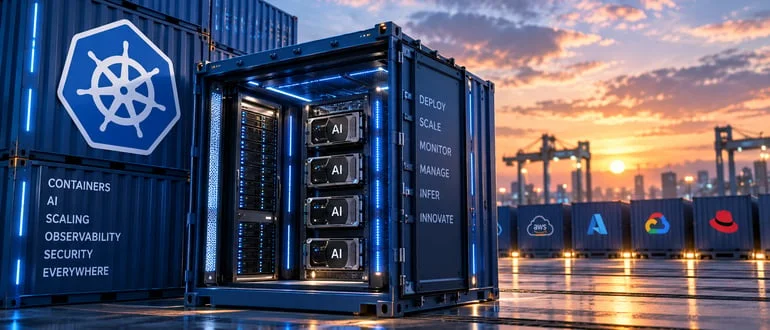
AI is Reshaping the Cloud Native Ecosystem
Over recent years, there have been claims that significant shifts in technology could render current infrastructure obsolete. When AI started to gain traction, these predictions amplified, with many arguing the existing cloud native stack couldn't accommodate the new, daunting workload complexities that came with it. However, the reality is quite different: AI has integrated itself into the already established microservices architecture, compelling it to evolve from within.
Kubernetes: A Central Player in AI Deployments
According to CNCF's latest data, an impressive 82% of container users are running Kubernetes in production environments. Notably, 66% of organizations hosting generative AI models are utilizing Kubernetes for at least some inference operations. This widespread adoption isn’t due to mere coincidence; the architecture of inference servers closely resembles that of web services. Kubernetes excels by managing long-lived processes, deploying valuable resources, and ensuring scalability—all familiar operational challenges for many organizations.
Standardization is Key
The advent of the Certified Kubernetes AI Conformance Program in November 2025 marked a pivotal moment. With initial participation from 18 platforms, it saw dramatic growth to 31 by KubeCon EU in March 2026, introducing functionalities aimed at AI workloads. This collaboration among major players like Amazon, Google, Microsoft, and Oracle illustrates a unified approach to running AI rather than confining it to specific environments.
Enhancements to the Core Kubernetes Functionality
New features are also enhancing how Kubernetes manages resources specifically for AI tasks. The introduction of Dynamic Resource Allocation incorporates accelerator requests directly into the Kubernetes API. Furthermore, tools like Kueue help manage GPU quotas alongside traditional CPU and memory allocations. The Gateway API Inference Extension is particularly noteworthy, as it permits model-aware routing and real-time load balancing based on live model metrics, allowing Kubernetes to effectively handle the nuances of AI workloads.
A Shift in Operations, Not Architecture
It’s essential to recognize that AI workloads present unique challenges. Scarcity of computational resources, the complexity of distributed jobs, and the need for precise management of inference requests require nuanced controls not traditionally encompassed by Kubernetes. Yet, rather than necessitating a completely separate architecture, these challenges are pushing the existing cloud native ecosystem to adapt and enhance its operational framework.
The Real Challenge: Operations Over Model Development
CNCF research highlights an important trend: only 7% of organizations deploy AI models daily, and more than half refrain from training models altogether. This indicates a significant focus on operational aspects rather than on developing proprietary models. The enterprise AI landscape tends to revolve around effectively routing and managing pretrained models, balancing issues such as identity, quotas, and observability—areas where Kubernetes and cloud-native configurations excel from years of experience.
Caution in Proprietary Control Points
While Kubernetes and related projects are making strides, there's a potential pitfall in the burgeoning categories of AI gateways and agent observability, where commercial entities may outpace open standards. If these layers solidify into proprietary structures, organizations may find themselves tied to specific solutions that could hinder portability. Monitoring this evolution is crucial, as it can influence the future landscape of enterprise infrastructure.
Conclusion: AI Gives New Life to Kubernetes
The integration of AI into the cloud native stack shows that rather than creating a wholly separate infrastructure, AI is presenting Kubernetes with an expanded role. The technology is being evolved to meet new demands without discarding its existing frameworks. As organizations continue to adapt to AI's requirements, the cloud native community is positioned to extend its capabilities, ensuring relevance and efficiency in a rapidly changing technological environment.
For deeper insights into this paradigm shift and its implications for the future of technology infrastructure, I recommend diving into Techstrong’s special report, The Great Unification, which examines these trends and sets forth key signals to watch for through 2028.
Discussion
Sign in to join the discussion.