Observability for enterprise teams transcends cloud-native frameworks, addressing diverse operational structures and system requirements.
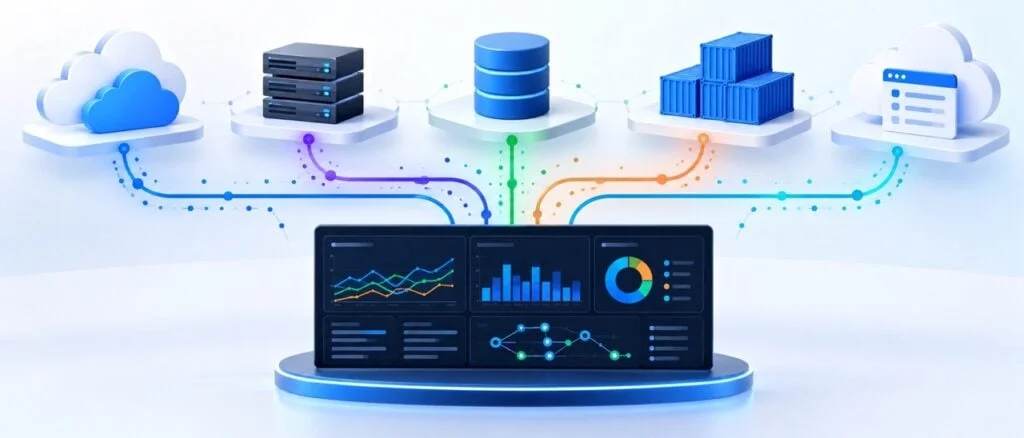
Enterprise observability conversations often center on cloud-native frameworks, focusing heavily on Kubernetes, microservices, and tools like OpenTelemetry. However, this perspective overlooks the diverse operational realities that many teams face across their IT environments.
Not every organization exclusively develops or maintains microservices. Many teams are responsible for an array of infrastructure, databases, platform services, and applications that might interface with external or legacy systems. The exact observability requirements for a team depend significantly on the systems they manage, their inherent risks, and the architectures they implement. Ignoring this broader scope presents a skewed view of what observability entails for enterprises today.
The Complexity of Enterprise Environments
In practice, enterprise cloud ecosystems often incorporate multiple architectural paradigms. It's common for a single organization to operate applications on virtual machines, utilize managed cloud services, access databases, and maintain SaaS platforms—all within a mix of containerized workloads. It’s important to recognize that simply using a cloud platform doesn’t inherently designate an application as cloud-native. True cloud-native designs stem from practices intended for dynamic and frequently evolving environments, which is a critical distinction impacting observability strategies.
Understanding this nuance is vital because the methodologies teams adopt for monitoring systems depend heavily on their architecture, execution environment, and the teams responsible for them. Therefore, cloud-native observability should be recognized as a subset of a more expansive observability framework applicable to various enterprise environments.
Moreover, what enterprise teams can handle regarding telemetry varies widely. Some possess the skills and resources to manage their own data collectors and telemetry pipelines, while others may rely on simpler integration methods that require less expertise and maintenance.
This is an area where prevailing discussions can miss the mark. Though modern instrumentation and cloud-native observability frameworks provide valuable solutions, they don’t necessarily align with every team’s needs or responsibilities. When cloud-native standards dominate the observability dialogue, organizations may receive guidance that fails to consider their actual capabilities and resource constraints. Thus, evaluating observability solely based on technical sophistication can be misleading.
Tailoring Visibility to System Needs
Observability does not necessitate the same depth of investigation across all systems. For many environments, teams already understand the metrics and thresholds that dictate their operational responses. For instance, a database team might require alerts for high CPU usage, while from an infrastructure perspective, immediate alerts on host availability might be paramount. Metrics, dashboards, and health checks often provide adequate visibility for these straightforward operational scenarios.
In contrast, dynamic and distributed environments present heightened complexity. In these scenarios, teams may need to correlate different metrics, logs, and traces to uncover dependencies and behaviors that weren't anticipated. In such cases, cloud-native observability frameworks can offer essential insights.
Adopting a uniform observability model across the board can lead to missing out on establishing the level of visibility more suited to individual systems and the specific inquiries teams need to address.
Establishing Practical Standards for Observability
A more effective way to evaluate observability is by examining the quality of decision-making it enables. Teams should be able to detect relevant changes, identify affected systems, recognize ownership, and determine subsequent actions. The benefits they derive are significant regardless of whether the insights stem from distributed tracing, database metrics, audit trails, or service-health notifications.
Effective observability should streamline the detection-to-action process, offering sufficient context to prevent confusion over responsibilities at the onset of an incident. The right insights should empower teams to quickly assess issues, gauge their impacts, and establish whether further investigation is warranted or if ongoing monitoring is sufficient. This pragmatic approach to observability serves as a more meaningful gauge of its effectiveness than whether it adheres strictly to trending instrumentation practices.
While cloud-native systems introduce new operational challenges and understanding complexities, they do not encapsulate the entire spectrum of enterprise observability. Broader discussions around observability should adequately represent the multitude of systems, structures, and operational limitations that enterprises navigate.
Ultimately, modern observability should prioritize enabling teams to comprehend and manage their environments effectively, rather than merely conforming to models often discussed within the industry.
Discussion
Sign in to join the discussion.