CloudBolt's new StormForge feature enhances visibility into GPU consumption by Kubernetes workloads, allowing IT teams to optimize resource allocation effectively.

CloudBolt Software has introduced a new feature within its StormForge platform that significantly enhances visibility into GPU utilization and memory consumption at the workload level across Kubernetes clusters. This addition is particularly timely as organizations are increasingly deploying AI applications within their Kubernetes environments. The need for precise resource management is more pressing than ever, given the burgeoning reliance on GPUs for advanced computational tasks.
Transforming GPU Management with StormForge
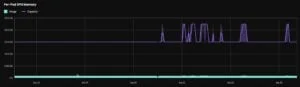
The new capability enables IT teams to track GPU processes tied to specific Kubernetes pods. This level of granularity not only empowers organizations to accurately assess resource consumption and associated costs across various dimensions, including clusters and namespaces, but it also aids in strategic decision-making. As Yasmin Rajabi, CloudBolt's Chief Operating Officer, explained, the existing NVIDIA Data Center GPU Manager (DCGM) only offers insights on physical devices rather than breaking down GPU usage by workload. This limitation means many organizations struggle with understanding which workloads consume the most GPU resources, and even worse, they often lack the ability to optimize those workloads effectively.
The traditional approach with DCGM operates on a node-by-node basis and lacks comprehensive historical data. StormForge, on the other hand, connects GPU activities back to the corresponding pods, enabling organizations to track the performance impact of specific applications. This functionality becomes crucial, especially for time-sliced GPUs, where traditional exporters might fall short. It’s a significant shift that could transform the approach to managing GPU resources for many IT departments struggling with visibility.
Addressing the Challenge of GPU Costs
As workloads increasingly rely on GPU resources, the need for efficient consumption management becomes paramount. Rajabi identified an industry-wide challenge where IT teams must manually ascertain workload mappings, which can lead to inefficiencies and increased costs. This manual process is not only labor-intensive but can often be error-prone, leading to significant overspending on cloud resources. StormForge alleviates this issue by providing an automatic breakdown of GPU use, offering actionable insights for optimization at the node level. Automation here isn’t just a convenience; it’s a necessity for improving operational efficiency and controlling costs.
Mitch Ashley, Vice President and Practice Lead at the Futurum Group, pointed out that the lack of visibility into GPU spending tied to specific workloads complicates essential tasks like chargeback and capacity planning—critical components for organizations seeking to scale their AI initiatives effectively. When costs can’t be tied back to specific applications, it creates a barrier to understanding true ROI, making it difficult to justify expenditures in a competitive landscape that demands accountability.
Navigating the Future of AI Workloads
With AI workloads set to dominate Kubernetes environments, the pressure to optimize resource utilization will only intensify. Current trends suggest that GPUs in data centers are often underutilized, with many servers barely reaching single-digit utilization rates. The ongoing increase in chip architecture complexities exacerbates this challenge, necessitating a strategic approach to resource allocation. What this means for you is that without a collective understanding of workload dependencies and their GPU demands, your organization could be wasting valuable resources.
As IT departments grapple with these complexities, prioritizing workloads based on GPU requirements is essential. Not every task demands high-tier GPU resources. Recognizing this allows teams to allocate tasks effectively, routing requests across Kubernetes clusters—leveraging diverse types of GPUs and even conventional CPUs when appropriate. The flexibility introduced by platforms like StormForge can find the sweet spot in balancing performance and cost, making it possible to maximize utilization without overspending.
The Implications of Enhanced GPU Management
The introduction of detailed GPU tracking capabilities is more significant than it looks. Enhanced visibility can fundamentally shift how organizations plan and execute their AI strategies. By offering insights that drive better resource management, IT teams can reduce wasted spend and improve workload performance. Moreover, an ability to predict and analyze usage patterns will empower organizations to make informed adjustments to their resource allocations, thus paving the way for scaling AI initiatives effectively. Expect to see more companies invest in technology that helps them understand and manage their GPU resources better, positioning themselves to take advantage of AI's rapid advancements.
The future may hold the potential for AI-driven agents to automate the right-sizing of Kubernetes clusters. However, achieving this ambition relies heavily on access to accurate telemetry data. Without reliable metrics, both IT administrators and AI tools will continue to face significant hurdles in managing Kubernetes effectively. In the meantime, products like CloudBolt’s StormForge position themselves as essential tools for IT teams aiming to optimize GPU consumption—a necessity as the demand for AI-driven workflows escalates. The pressing challenge remains: how to best manage these limited IT resources while catering to the diverse needs of modern applications.
Frequently Asked Questions
What is CloudBolt's new GPU optimization capability?
CloudBolt's StormForge platform can track GPU utilization and memory consumption per workload in Kubernetes, allowing for better resource optimization.
How does StormForge improve GPU visibility?
StormForge tracks individual GPU processes and maps them to Kubernetes pods, enabling detailed insights into resource usage across workloads.
How does CloudBolt help reduce GPU costs?
The platform assesses GPU costs by cluster, namespace, and workload, recommending optimal node types to mitigate overprovisioning.
Discussion
Sign in to join the discussion.