Exposure data connects cloud alerts to permissions, asset value and attack paths, helping teams prioritize investigations and contain risk faster.
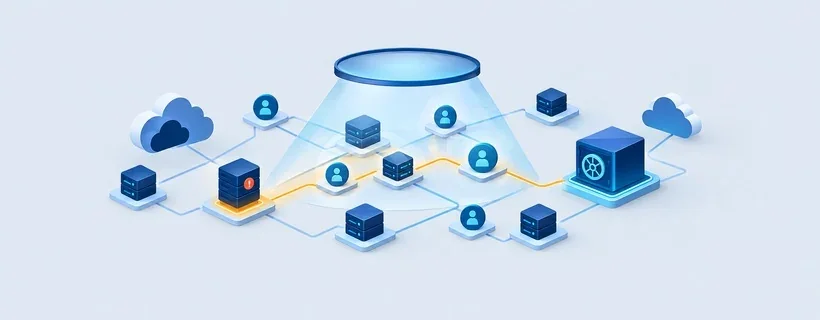
Cloud alerts show where suspicious activity occurred. Exposure management helps explain what that activity could put at risk. For security teams sorting through noisy detections, that context can change which incident gets attention first and what response makes sense.
A workload that touches sensitive storage or can assume an administrative role carries more potential impact than one with narrowly scoped access. The alert may look similar in both cases; the permissions and resource relationships behind it are what distinguish a routine anomaly from a high-priority investigation.

Detection identifies activity; exposure frames its impact
Cloud detection and response (CDR) monitors cloud environments at runtime, flagging suspicious behavior involving workloads and identities. It gives investigators evidence to assess what happened, such as an unexpected permission change or a workload reaching an unfamiliar external server.
That evidence still needs interpretation. A new connection might indicate stolen credentials, but it could also follow a legitimate application update. Cloud services routinely create workloads and adjust service account permissions. Without details about the workload’s role, access and dependencies, analysts have to determine whether a change was authorized before they can estimate its significance.
Exposure management supplies that surrounding detail. It maps weaknesses and relationships across cloud resources, helping investigators see what an attacker could reach if the activity proves malicious. The distinction matters: detection describes observed behavior, while exposure context helps outline the potential consequences.
Alert volume makes context a triage requirement
Cloud detection systems often flag behavior because it differs from a workload’s usual pattern. A service account accessing a previously unused storage bucket could signal credential theft—or a developer may have redirected the application to a new storage service. A container or serverless function can also start, trigger an anomaly alert and stop before doing anything harmful. Each alert still asks an analyst to verify the circumstances.
At scale, those checks consume time. Teams may move among cloud consoles, identity tools and vulnerability records just to establish what a workload can access. Separate detection tools for different cloud providers can add to the burden by producing their own alerts without a shared view of activity. In a 2026 N-able survey, more than 86% of respondents said their security alerts had increased over the previous year.
The pressure isn’t simply the number of alerts. It’s that many arrive with little indication of business impact, leaving analysts to spend similar effort on events with very different potential consequences. Asset importance, identity permissions and exploitable paths can help teams decide which events need deeper investigation first.
Permissions and asset value change the priority
Exposure context can include the importance of the affected workload, the sensitivity of the information it handles, the access rights of its associated identities, and the misconfigurations or vulnerabilities that could enable further access. It can also show whether weaknesses and resource relationships combine into a route toward critical systems.
Consider an alert for a workload making an unexpected connection to cloud storage. If that storage contains sensitive customer information and the workload’s service account has permissions beyond its operational needs, the event warrants closer scrutiny. The analyst has a concrete reason to check whether the identity was misused and whether its access reaches other resources.
This context doesn’t prove that an attacker has taken over the account. It does help estimate what might be exposed while the investigation continues. That’s a useful distinction for response teams: they can prioritize containment based on plausible impact without treating every anomaly as a confirmed breach.
Non-human identities can extend an attacker’s reach
Cloud workloads often authenticate with non-human identities, including service accounts, so they can call services without an employee signing in. Those identities may read storage objects, change infrastructure or assume another role with broader privileges. Permissions can outlast the application or project that originally needed them, and inherited policies may grant access administrators haven’t reviewed closely.
Cloud infrastructure entitlement management (CIEM) assesses cloud permissions and can reveal excessive access. During an investigation, that information helps answer a practical question: if this identity is compromised, which resources could it reach?
For example, an application’s service account might be allowed to assume an administrative role. An attacker who gains control of the application could potentially use that route to change other cloud resources. Responders need to establish whether the suspicious activity involved that identity, whether its permissions were used outside normal operations and which rights should be restricted.
Revoking an exposed credential can address an immediate threat. Removing permissions the application doesn’t need can also limit the damage a later compromise could cause. Both actions depend on knowing which identity is involved and what its access actually covers.
Attack paths connect weaknesses to reachable systems
Attack path analysis makes the relationships between vulnerabilities, identities and resources visible. Imagine an internet-facing workload with a vulnerable application component and an identity that can assume a privileged role. If that role can reach storage containing sensitive information, the combination creates a potential route from the exposed application to valuable data.
Logs can show whether suspicious activity occurred. The mapped path adds a different kind of evidence: it shows what the attacker might have been able to reach under the conditions present in the environment. Analysts can investigate whether the application or its identity was involved, while teams work to break the route.
Restricting the workload’s ability to assume the privileged role could block that path while the application team fixes the vulnerability. Attack path analysis can also change how vulnerability teams prioritize remediation: a weakness with a modest severity rating may deserve attention when it connects an exposed workload to a critical resource.
Connect exposure data to the response workflow
For a useful investigation, an analyst should be able to identify the workload’s associated identity, see the identity’s permissions and understand whether a reachable route leads to other resources. Without those connections, the analyst may have to reconstruct them across consoles, identity records and vulnerability reports before deciding how to contain the event.
Bringing current exposure information into the investigation workflow can shorten that reconstruction. Depending on the evidence, responders might revoke a credential, narrow an account’s permissions or isolate a compromised workload. They can then investigate whether the attacker accessed other cloud services and send underlying weaknesses—such as an insecure configuration or unnecessary access—to the teams responsible for fixing them.
Security information and event management (SIEM), extended detection and response (XDR), and CDR provide detection and investigation evidence. Exposure management adds a view of the weaknesses and resource relationships that shape response priority. The value depends on the quality of the underlying records: outdated identity data can send analysts chasing permissions that no longer exist, while incomplete asset inventories can obscure access to sensitive systems.
For cloud security operations, the practical gain comes from connecting an alert to what the affected workload can reach and what those resources mean to the business. As cloud environments and alert queues grow, keeping identity and exposure records current will help teams spend their limited investigation time where the potential impact is greatest.
Discussion
Sign in to join the discussion.