Kubernetes can keep workloads running through failures, but teams also need a separate way to reach and restore the infrastructure.
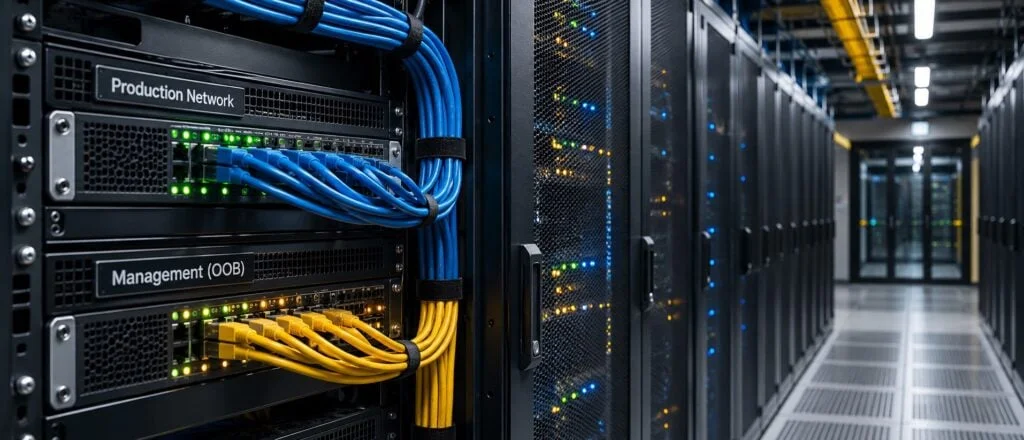
Kubernetes can restart containers, replace pods and move workloads to healthy nodes. Yet those safeguards can’t help an operations team that loses access to the infrastructure it needs to repair. As clusters spread across remote sites and support AI workloads, preserving a way back into the network is becoming a core part of resilience.
A failed router, switch, firewall, WAN link, DNS service or management network can leave workloads running temporarily while cutting engineers off from the systems needed to restore full service. That gap between workload continuity and infrastructure recovery is easy to miss in resilience plans built around redundancy and automated failover.
Redundancy doesn’t guarantee recovery
Multiple clusters, availability zones, network links and power sources can reduce the effect of individual failures. They don’t ensure that engineers can reach the affected equipment when a shared dependency breaks.
Imagine a routing change that isolates Kubernetes nodes, a firewall rule that blocks management traffic or a WAN outage at an edge site. Monitoring may identify the disruption, and local workloads may continue for a time. But if the same production network carries the team’s access to switches, routers, firewalls and servers, the failure can take the repair path down with it.
That changes the operational question. It’s no longer just whether an application can withstand a disruption; it’s whether anyone can still reach the infrastructure to fix one.
Seeing a failure isn’t the same as controlling it
Metrics, logs, traces and AI-assisted operations can help teams spot problems faster. They provide visibility, but they don’t guarantee a working connection to the device that needs attention.
Automation has the same dependency. A remediation workflow can act quickly while its control plane and management network are available. If either is caught in the failure, the automation may be unreachable too. Teams need to plan for detection and access as separate capabilities.
Keep a separate route to critical systems
For important infrastructure, recovery access should be as independent as practical from the production path. Options include a dedicated out-of-band management network, direct console access, alternate WAN or cellular connectivity, securely managed credentials and basic recovery actions that don’t depend on the primary network.
The setup should be simple enough to use under pressure. During an outage, engineers need a predictable way to reach devices, identify what changed and make a controlled correction. A complicated second management system can add another failure point instead of reducing one.
Distance makes this design more consequential. Engineers may be near a central data center, but an edge location, branch office, colocation facility or remote AI deployment could be hundreds or thousands of miles away. Without independent access, a quick configuration fix can turn into a site visit and a longer outage.
Exercise the loss of management access
Disaster recovery tests often check whether applications fail over or remain available after a server or site failure. Those exercises matter, but they don’t show whether teams can regain control when normal management access disappears.
Run scenarios that remove production IP connectivity. Can engineers reach network equipment through a console? Are recovery credentials available and protected? Can someone remotely cycle power on an unresponsive device? Is there a documented order of operations for restoring access before attempting broader recovery?
Those answers involve platform engineering, SRE, network operations and security. Recovery access is an operational design concern shared across teams.
AI clusters raise the cost of a lost path
Kubernetes is increasingly used to manage AI infrastructure, where GPU compute depends on high speed switching, specialized networking, storage, power and cooling. A network failure can disrupt training jobs and inference services, block storage access or leave costly systems idle.
As these environments grow in value and spread across more locations, teams need to preserve a way to control the underlying infrastructure even when its normal network is down. Kubernetes can make workloads resilient; a dependable recovery path is what lets operators restore the systems beneath them.
Discussion
Sign in to join the discussion.