As cloud native architectures challenge traditional testing methods, dependency mocking tools need to evolve with features that ensure test accuracy.
Adapting Dependency Mocking for Cloud Native Architectures
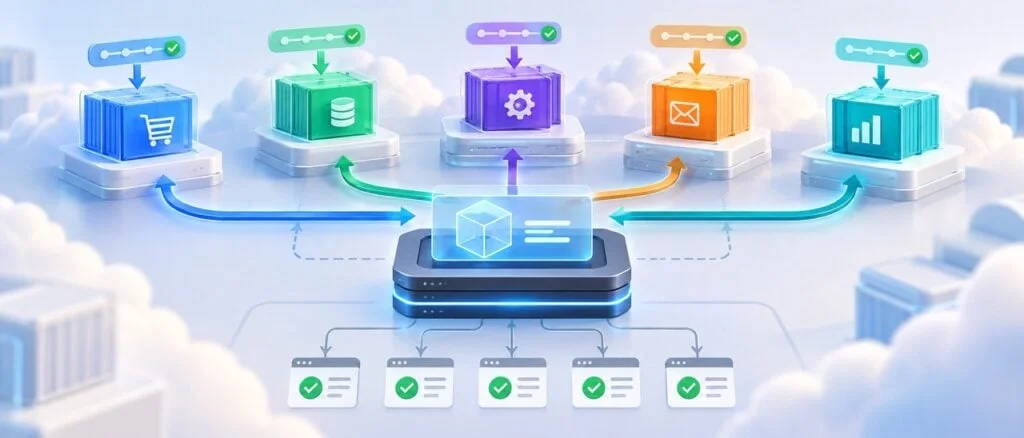
Dependency mocking has emerged as a pivotal aspect of software testing in cloud native architectures, yet many existing tools fall short. Historically, these tools were crafted for environments with predictable dependencies and stable service releases. However, as organizations embrace cloud native strategies, which include frequent and independent service deployments, the need for more agile and intelligent dependency mocking solutions becomes evident.
The Impact of Independent Deployments
In cloud native systems, services like payment, inventory, and notification components can deploy at their own pace based on their individual testing cycles. This means that changes in one service can occur without any prior communication with downstream services that rely on it. As a result, dependency mocking tools must evolve to handle situations where the accuracy of mocks deteriorates as real services update. A mock for a payment service, for instance, may not represent its current behavior if updates are made without re-evaluation by dependent services.
The traditional dependency mocking landscape often lacks a mechanism to recognize such changes in real-time. Without awareness of deployment events, frameworks like WireMock cannot update mocks to reflect the latest service behavior following deployments. This gap leads to a scenario where integration tests may appear to pass, while accumulated discrepancies between the mocks and actual service behavior grow increasingly significant.
Key Features for Modern Dependency Mocking Tools
To bridge the gap highlighted by cloud native deployments, dependency mocking tools require specific capabilities that accommodate the unique challenges of this architecture:
Deployment Event Awareness
A fundamental requirement is the ability to detect upstream deployment events automatically. When changes occur in upstream services, dependency mocking tools need to signal a re-validation of mock configurations. Tools that connect with CI/CD pipeline notifications can facilitate this process, allowing for a more cohesive development environment without relying on manual updates and communications.
Behavior Capture from Real Interactions
To ensure mocks accurately represent current behaviors, dependency mocking software must capture behavior based on real service interactions. Many teams may overlook minor changes that aren't documented, like modifications in response structures. Tools designed to derive mock data from actual service outputs, rather than documentation, can better account for these shifts. Capturing realistic service interactions allows for a dynamic representation of behavior, adapting to changes as they occur in cloud environments.
Handling Non-Deterministic Fields Automatically
Responses from cloud native services often include fields that vary with each call, such as identifiers or timestamps. Dependency mocking tools that automatically identify and manage these dynamic fields are crucial. This minimizes false positives in test failures that arise from variability rather than code errors, leading to a more precise testing environment.
Cross-Service Change Visibility
Moreover, teams require insights into how upstream services evolve over time. Knowing whether a field has moved within a response or if an error code has changed can be invaluable. This specificity allows downstream teams not only to update mocks but also to identify whether semantic changes necessitate application code modifications. Without this level of granularity, teams could miss significant adjustments that impact application functionality.
Evaluating Dependency Mocking Tools
When assessing which dependency mocking tool best fits a cloud native architecture, it’s essential to shift the focus from simplistic considerations like setup ease to the extent of automated capabilities for real-time adaptation. Questions should concentrate on the tool's ability to integrate with deployment signals, capture real interaction data, reveal behavioral modifications, and sustain its operations across various services without necessitating extensive manual management.
Tools designed with cloud native aspects in mind will mitigate the risk associated with outdated mocks as upstream services evolve independently. Failing to adopt smarter dependency mocking solutions could lead to diminishing integration test accuracy as services continue to change rapidly.
As teams pursue more effective cloud native practices, investing in sophisticated dependency mocking software will be crucial to maintaining the reliability of integration tests while navigating the complexities introduced by frequent and distributed deployments.
Discussion
Sign in to join the discussion.