Echo strengthens its hardened software portfolio by acquiring assets from Minimus, enhancing DevSecOps efforts amidst rising security challenges.
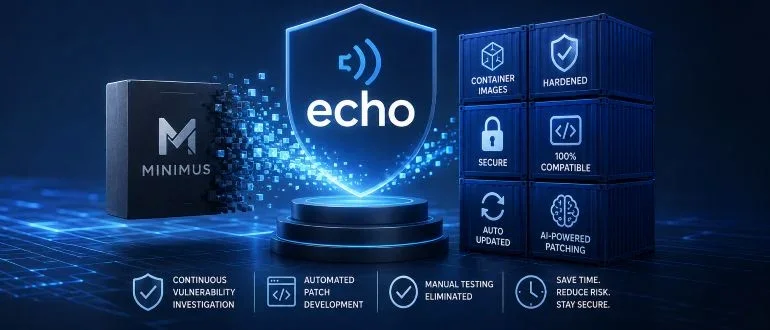
Echo has announced its acquisition of technology assets from Minimus, a company known for providing hardened open source container images, which has recently opted to cease operations. This strategic acquisition allows Echo to enhance its offerings in the realm of secure software distribution.
Expanding Echo’s Portfolio
The assets from Minimus will be integrated into Echo's existing portfolio of hardened software artifacts, which includes hardened virtual machines, open source libraries, serverless functions, operating system packages, and Helm charts designed for Kubernetes deployments. With these additions, Echo not only strengthens its position in the software distribution market but also positions itself as a significant contender in the broader security software space. This integration doesn’t just add more offerings; it consolidates Echo’s expertise in delivering secure and reliable software environments, which is essential for organizations increasingly relying on cloud-native architectures.
DevSecOps Advantages
According to Echo's CEO, Eilon Elhadad, the integration of these assets will create a more streamlined environment for DevSecOps teams. The company's plan includes providing local instances of repositories filled with hardened software artifacts, ensuring that teams can swiftly access secure components when needed. This addresses a common pain point: the lag time associated with retrieving and verifying artifacts. By centralizing secure artifacts, teams can cut down on the time spent searching for compliant versions, allowing them to devote more energy to actual development and security tasks.
This repository not only simplifies access to secure artifacts but also supports a dynamic updating mechanism. Organizations can replace existing artifacts with versions built from source code, which not only ensures compatibility but significantly enhances security measures. The ability to quickly adapt and replace outdated software in a controlled manner is a critical factor as businesses contend with a shifting threat environment.
AI Agents Redefining Security Protocols
The inclusion of proprietary AI agents within Echo's operations is particularly significant. These automated agents actively investigate vulnerabilities and play a critical role in the development and validation of patches. This functionality alleviates the burden DevSecOps teams face amid an ever-expanding list of vulnerabilities in applications. With the threat landscape continuously evolving, teams often struggle to keep pace with necessary security updates. Elhadad emphasizes that employing AI in this capacity shifts the continuous responsibility of artifact patching away from DevSecOps teams, thereby simplifying their workflow.
Moreover, the implementation of AI can facilitate more proactive security responses. Traditional strategies of waiting for vulnerabilities to become apparent are no longer viable; rather, organizations must anticipate potential threats and act preemptively. The efficiency introduced by AI-driven patch management may serve as a crucial lifeline for teams overwhelmed by the demands of security in a fast-paced development environment.
Shifting Industry Dynamics
Mitch Ashley, VP and practice lead for software lifecycle engineering at The Futurum Group, reflects on the closure of Minimus, suggesting that it underscores the changing economic landscape surrounding hardened open-source solutions rather than indicating a decline in demand for such offerings. His insights highlight a broader trend wherein companies must adapt continually to maintain relevancy and competitiveness. It's not just about demand; it's about how businesses sustain their operations and evolve their products in the face of market pressures.
Future moves by Echo, such as pursuing additional scanner integrations, could decisively influence their product strategy and overall market positioning. The interplay between security needs and software functionality is intricately tied to how well organizations can adapt as threats and technologies evolve.
The Impact of Increasing Vulnerabilities
As organizations confront an escalating number of vulnerabilities primarily driven by advancing AI techniques, the urgency to revamp DevSecOps practices becomes critical. Here's the thing: the real challenge lies in how swiftly these teams can respond to emerging cyber threats, especially as new exploits continue to surface at an alarming rate. Many times, DevSecOps teams find it nearly impossible to secure all applications before attacks occur, highlighting the necessity of prioritizing which applications must be protected first.
This need to focus on essential business applications often leads to difficult decisions. Security resources are finite; organizations must determine where they will allocate their most stringent protections. That said, this prioritization should involve a transparent assessment of risks and vulnerabilities that affect the business’s bottom line.
The Shift Towards Containerization
Interestingly, this climate of urgency may foster increased adoption of containerization. Containers, which are designed to be more easily updated and replaced, could offer a more agile approach to cybersecurity. When a vulnerability is identified, AI coding tools might facilitate rapid patch creation, quickly delivering updates to specific containers rather than undergoing extensive modifications to monolithic applications. This reflects a significant shift in software development methodologies, allowing for improved flexibility and resilience against attack.
Future Outlook for Application Security
Looking ahead, while the current scenario may be tough for application security, there’s potential for improvement on the horizon. The accumulation of technical debt from legacy systems may compel companies to reevaluate application design and security practices. (And this is the part most people overlook; they often underestimate how legacy systems can hinder progress.) Ensuring that future applications are built with security as a foundational element, from design through deployment and into subsequent updates, will be vital.
If you're working in this space, consider the implications of adopting a security-first mentality during your development processes. A shift in how security is integrated into the application lifecycle could mark the difference between thriving and merely surviving in an increasingly hostile digital environment.
Discussion
Sign in to join the discussion.