Securing the ingress layer of AKS is vital; utilizing Azure Application Gateway and WAF can effectively safeguard against external threats.
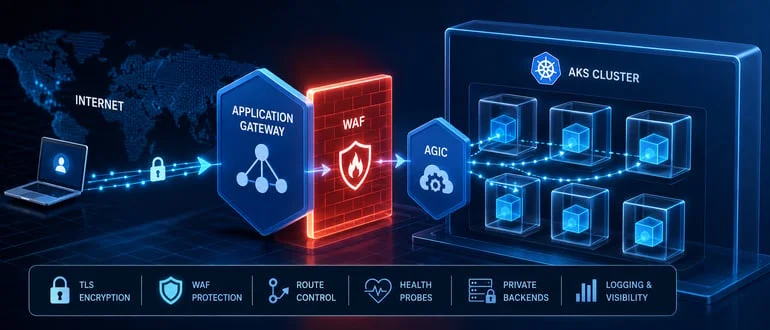
### The Importance of Ingress Security in AKS
Kubernetes environments are often designed with significant focus on securing the internal components. Teams dedicate time to lock down nodes, carefully scan container images, configure role-based access control (RBAC), and establish workload identities. However, this attention frequently overlooks one of the most vulnerable points in the architecture — the ingress layer.
Ingress is essential for managing north-south traffic, which is the data flow that enters and exits the Kubernetes cluster. This is the primary pathway for external requests—be it APIs for customer interactions, integration with partner applications, or internal services. As such, protecting this ingress layer isn't just advisable; it's critical.
A misconfiguration in the ingress setup can lead to disastrous security lapses. This could mean unauthorized access to sensitive workloads or creating vulnerabilities that expose the entire cluster to potential attacks. The stakes are high, and this article will delve into how to secure this crucial inbound traffic using three key Azure components: Application Gateway, Web Application Firewall (WAF), and Application Gateway Ingress Controller (AGIC).
### An Overview of Traffic Types
In Kubernetes, traffic typically divides into two types:
- **North-South Traffic:** This refers to the incoming and outgoing traffic to and from the cluster. It's the traffic that represents the biggest risk, as it connects external users with your services.
- **East-West Traffic:** This involves internal communication between workloads within the cluster itself.
Here’s the kicker: while both traffic types are important, north-south traffic represents the primary attack vector for applications exposed to the internet.
### The Limitations of Basic Load Balancing
Many organizations kick off their security efforts by implementing a standard ingress architecture, primarily for load balancing. Unfortunately, this simplistic approach falls short of providing necessary protections against sophisticated web threats, like SQL injections, cross-site scripting (XSS), and bot attacks. It merely forwards requests without delving into the content to scrutinize for malicious intent.
### Enter Application Gateway and WAF
The Azure Application Gateway serves as a superior layer 7 load balancer, adept at making smart routing decisions based on various criteria, including hostnames and protocols. When integrated with WAF, it gains the capability to inspect incoming requests before they ever reach your Kubernetes workloads. This two-pronged approach ensures that malicious requests are filtered out early in the process, effectively guarding your applications against a range of attacks.
### The Transformative Role of AGIC
It’s a common misconception that AGIC is responsible for forwarding traffic. Instead, it’s a translator between Kubernetes and Application Gateway, automatically updating the necessary configurations without manual interventions. This allows platform teams to manage ingress resources in a Kubernetes-native manner, fostering operational efficiency and consistency.
### Layered Security Strategy
One of the key lessons in securing north-south traffic is to implement a layered approach. Start with TLS termination — consider end-to-end encryption to maintain confidentiality throughout the data path. Next, take full advantage of WAF to guard against common exploits. Limit exposure by restricting access to admin endpoints, and continuously monitor health checks to ensure workloads are responsive and functional.
Logging is also fundamental; it acts as the eyes of your security posture. Without robust logging, identifying threats or misconfigurations becomes much more challenging. Each ingress layer should generate comprehensive logs to track access attempts, potential attacks, and system health.
### Conclusion
Securing north-south traffic isn't merely a checklist of configurations; it's an ongoing strategy that requires vigilance, multi-layered protections, and a comprehensive understanding of your architecture. With Application Gateway, WAF, and AGIC working in concert, you can construct a fortified ingress layer that effectively protects against external threats. Remember, a secure cluster can easily become vulnerable if it’s backed by a flawed ingress setup. Prioritizing ingress security is not just prudent; it’s essential.
Discussion
Sign in to join the discussion.