The Pixel 11 Pro Fold avoids last year’s battery rupture, but a bend test exposes a recurring antenna-line break and easily removed panels.
A safer bend test, with a familiar failure
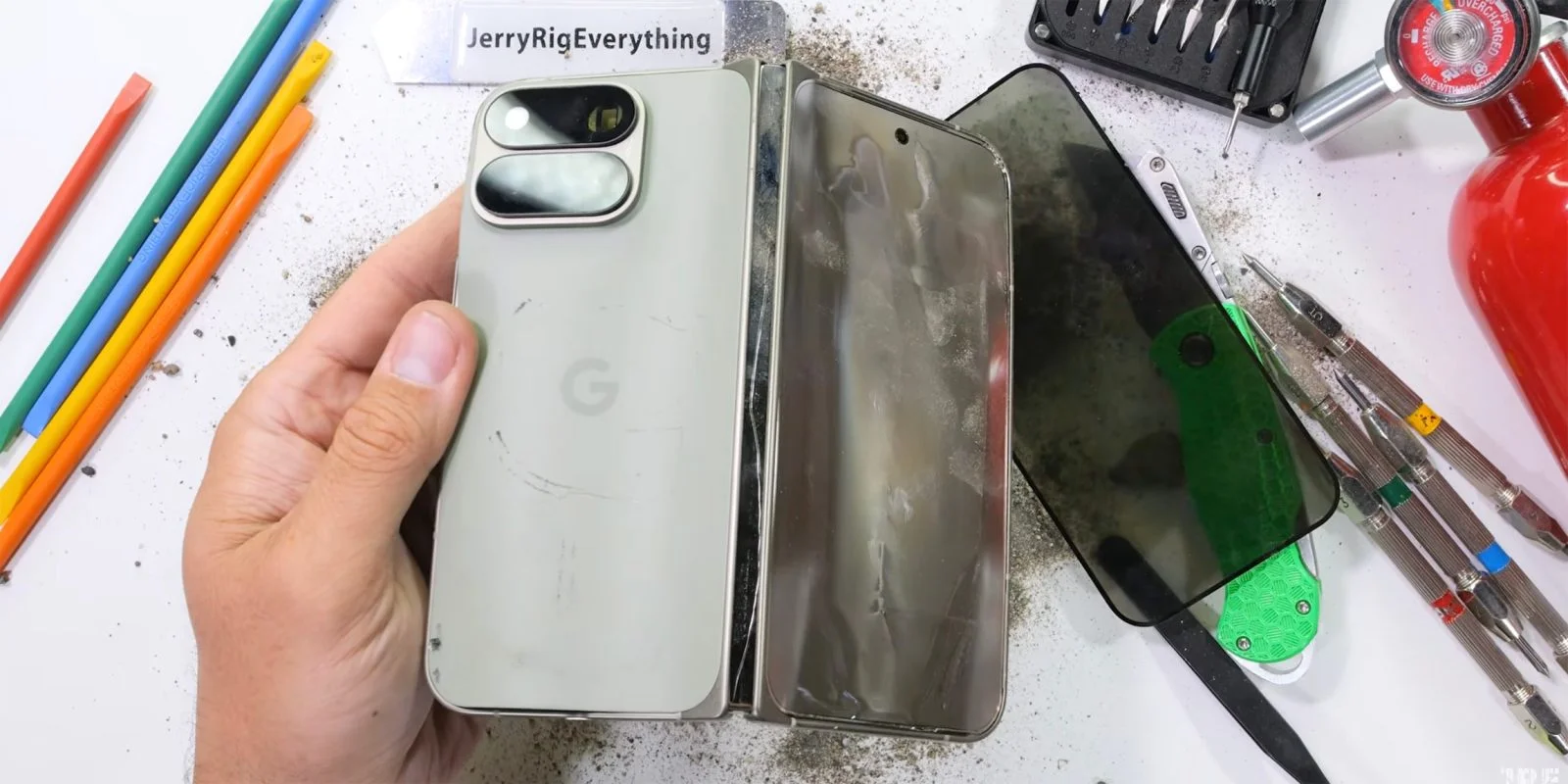
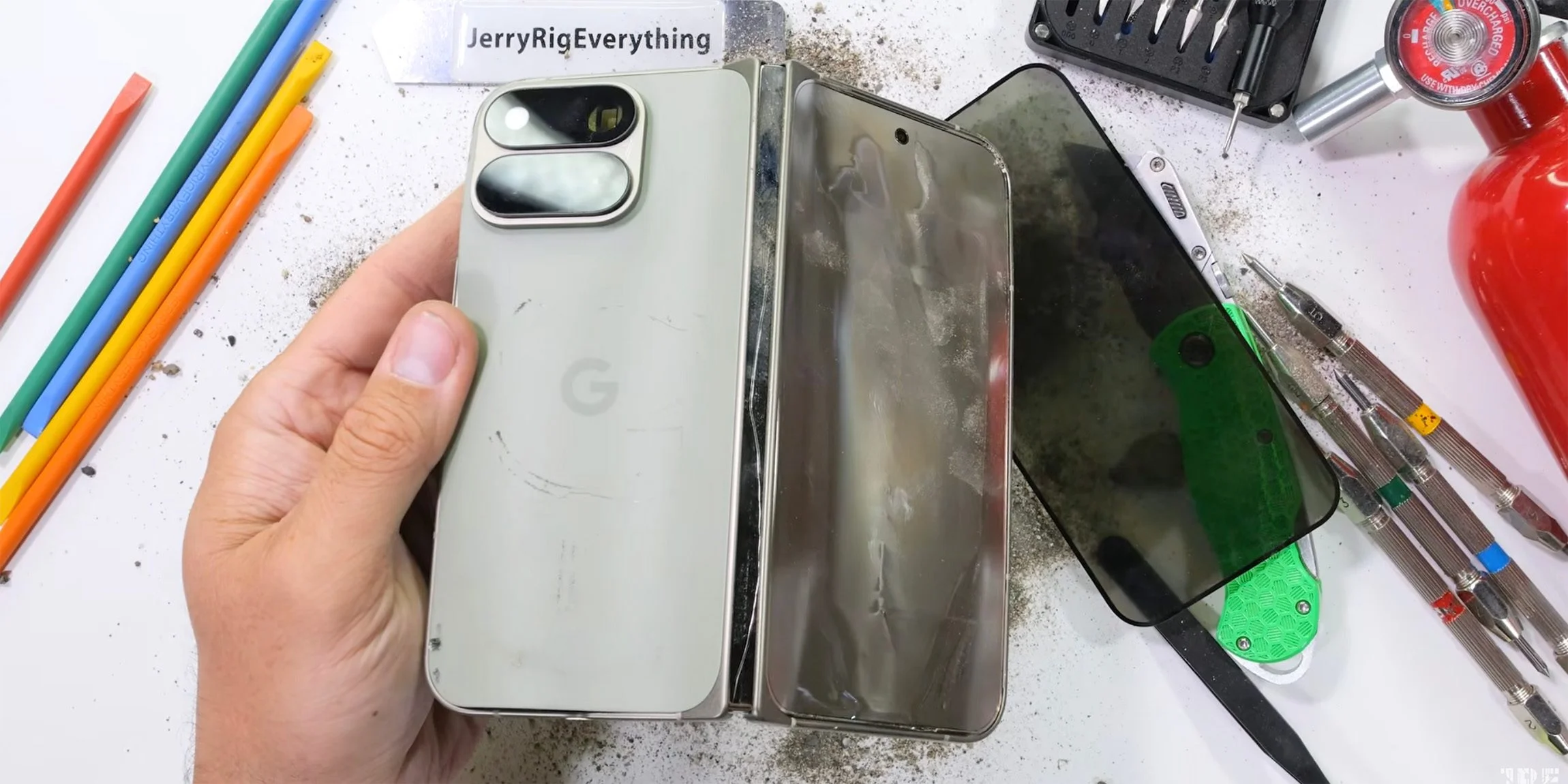
Google has improved one troubling part of its foldable’s durability story: the Pixel 11 Pro Fold survived JerryRigEverything’s bend test without the battery rupture seen in last year’s model. That’s a meaningful improvement, because damage around a battery can turn a structural failure into a more serious safety concern. But the phone still failed at a familiar structural weak point, leaving the bigger design question unresolved: has Google changed the parts of the device most likely to give way, or mainly reduced the severity of one failure?
The Pixel 10 Pro Fold’s test ended with a battery rupture, an unusually severe outcome that some described as an explosion. This year’s device didn’t repeat that failure, though it still broke when bent. A bend test is a controlled demonstration, not a full measure of how a phone will hold up through years of ordinary use. Still, it can reveal where a device concentrates stress, and a repeatable weak point deserves attention when the product is designed to fold and unfold as part of normal use.
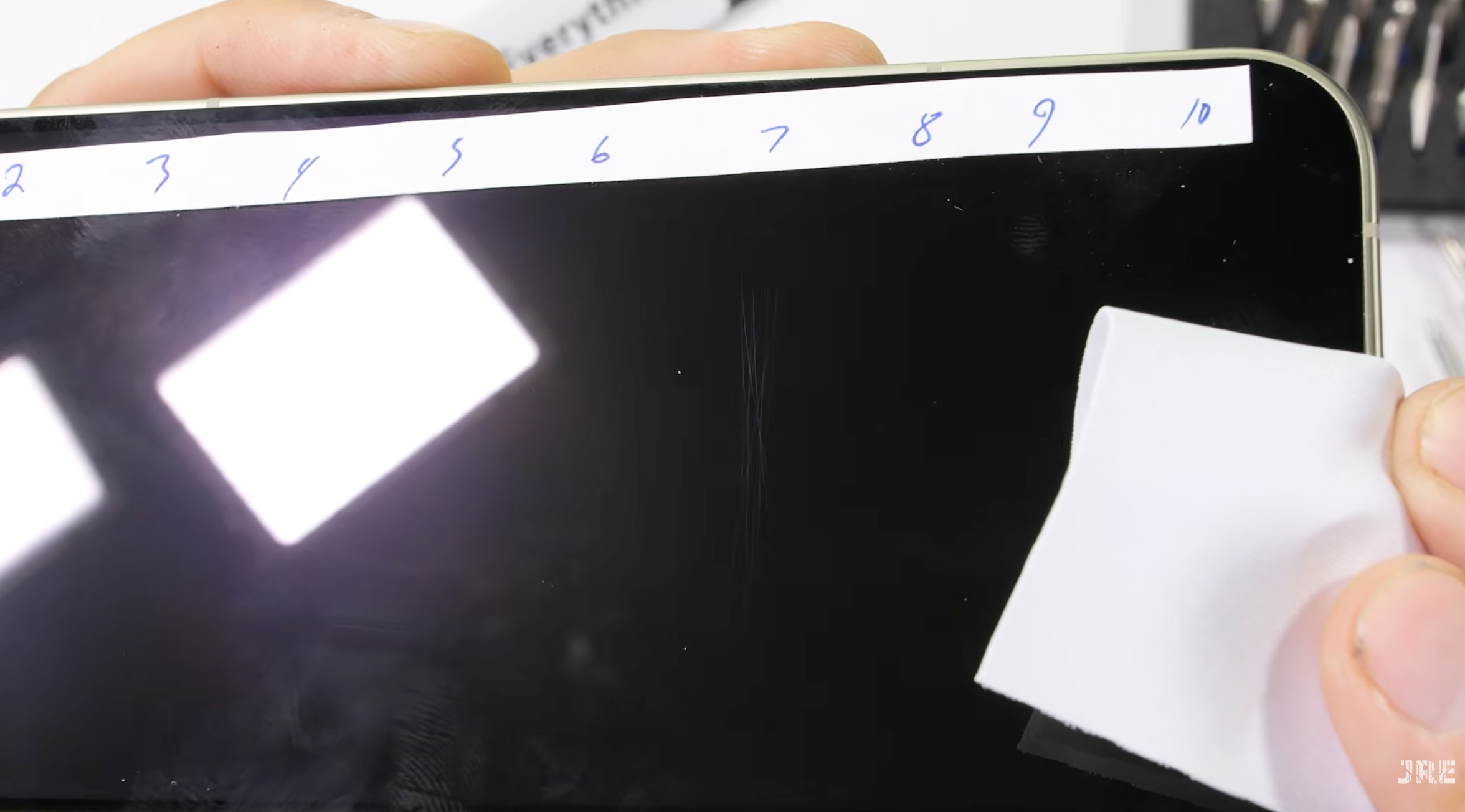
The frame gave way along the antenna line, the same spot that has failed on earlier models. That recurring break stands out against improvements elsewhere: the ceramic cover over the outer display resisted scratching at Level 6 on the Mohs hardness scale, while deeper grooves appeared at Level 7. The rear “glass compositive fiber” panel, by contrast, behaved like plastic and scratched under a knife. These results describe different kinds of durability: resistance to surface scratches doesn’t tell you how well a frame handles bending, and a material’s name doesn’t guarantee that it’ll feel or perform like glass.
That distinction matters in a foldable. Buyers encounter the device as a collection of surfaces, a hinge, a frame, and panels that need to stay attached; damage to any one part can affect the impression of the whole product. A scratch test can make for a tidy comparison, but it answers a narrow question about the surface under a particular tool. The bend result points to a different concern: whether the structure can withstand force at a vulnerable area. Here's the thing: durability isn’t one score.
Panels come away with little effort
The test also showed how readily the phone’s exterior can separate: the front panel popped off, and the rear panel was easy to tear away by hand, without tools. That’s a stark weakness for a device Google says has received durability upgrades. It also complicates the message from the scratch test: a resistant display cover can coexist with exterior pieces that appear poorly secured under force. The teardown-style demonstration doesn’t establish how often panels might loosen in daily use, but it does raise a practical question about how the assembly holds together when the phone is stressed.
For a foldable, the frame and outer panels aren’t just cosmetic details. They help protect the components inside, and their fit influences whether the phone feels solid when handled. A panel coming away during a forceful test doesn’t prove it’ll happen in a pocket or during routine opening and closing; those are different conditions. Yet the ease of separation is striking. This is more significant than it looks, because users judge durability by the device as a whole, not by its strongest surface.
The rear “glass compositive fiber” result deserves the same careful reading. The reported scratch behavior suggests the material doesn’t resist a knife the way the ceramic outer cover resists the test tool. It doesn’t, by itself, establish how the back will fare against every common source of wear or what trade-offs Google made in choosing it. If you're working in this space, the useful question is how the material performs in the role it’s meant to serve, and whether its protection and feel meet expectations. A label can describe a material; it can’t settle that question.
What the next redesign needs to address
Google has hinted that Pixel redesigns arrive every two to three years, putting the foldable in line for a broader refresh. The repeated antenna-line failure and loose panels give that next redesign clear problems to address. A refresh would matter most if it changed how force is handled around the recurring weak point and how firmly the exterior is attached. A different finish or a stronger scratch result would be less persuasive if the frame still failed in the same place.
That said, a single stress test can’t tell us whether Google will make those changes, or how the phone compares across every kind of wear. It does offer a clear set of questions for future models: does the frame still break at the antenna line, do the panels stay put under stress, and do the chosen materials hold up in the ways buyers expect? The answer needs to come from the design itself, not from a durability claim in isolation.
For now, the Pixel 11 Pro Fold’s result is mixed. Avoiding last year’s battery rupture is a real step in the right direction, but the familiar break and easily detached panels make the broader durability story hard to call settled. And yet. A foldable that survives one test more safely still has work to do if its structure gives way at a known weak spot.
Discussion
Sign in to join the discussion.