Finding zero vulnerabilities in a container image doesn't guarantee its safety; understanding its origin and build process is equally important.
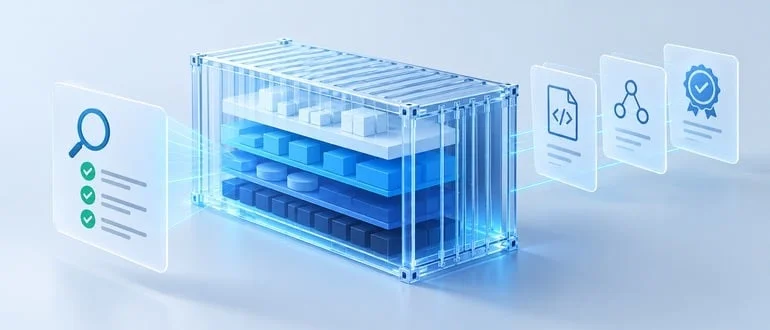
In the realm of container security, achieving a vulnerability report that shows zero known CVEs may feel like a significant achievement. Running scans through tools like Trivy or Docker Scout and receiving a clean bill of health can lead many to assume they're safe to deploy. However, this assumption misses a key point: what exactly does a clean scan confirm, and is it sufficient for ensuring trust in the image?
A scan that reports zero known vulnerabilities only indicates that none were found in the identified components of the image; it tells nothing about the image’s trustworthiness. The reality is that numerous factors related to the image’s origin, its build process, the chosen dependencies, and its software composition remain largely unverified.
Understanding the Limitations of Vulnerability Scans
Recent events in supply-chain security remind us why a vulnerability scan alone is not enough. For instance, during the 2026 compromise of Nx Console, an attacker exploited stolen GitHub credentials to release a malicious version of the tool. This version was accepted into legitimate channels, highlighting that compromised credentials can undermine security even when scans return clean.
The core issue is that vulnerability scans do not encompass every possible risk associated with an artifact. These scans mainly correlate the visible components of an image against vulnerability databases. While tools like Docker Scout analyze images against an SBOM (Software Bill of Materials) to check for vulnerabilities, they still face limitations. Today's clean image could very well be at risk tomorrow as new vulnerabilities continually emerge. Importantly, even if a scanner reports an image as having zero known vulnerabilities, absence of a CVE doesn't negate the presence of malicious software.
In many cases, compromised dependencies can exist devoid of a recognized vulnerability identifier. This means that a scanner could return a false sense of security, with zero known vulnerabilities, while malicious code infiltrates the supply chain unnoticed.
The Importance of Image Provenance
Following a scan that yields zero vulnerabilities, the critical next question to consider is: Who created the image, and how was it built? Merely relying on public registries to pull container images does not inform you about its origins or the security implications tied to its composition.
The concept of image provenance is essential; it encompasses data about the source, build process, and components used to create the artifact. While signatures can verify the identity of those who signed the image, determining whether that entity is trustworthy is an entirely separate discussion.
It’s crucial to combine different pieces of evidence when assessing an image’s reliability. An image's digest offers a unique identifier for the artifact, while cryptographic signatures can affirm that a trusted identity indeed signed it. Provenance, on the other hand, provides insight into the building process and source, successfully tying various aspects together.
Assessing Contents Beyond Vulnerability
Examining the contents of an image is equally critical. Often, a container image will include more software than the application needs, such as shells, package managers, and utilities. Eliminating unnecessary components can reduce the attack surface. Still, removing access to tools doesn't equate to erasing vulnerabilities. The goal should be to develop an artifact where every component is intentional and tied back to a controlled build process.
Maintaining Trust Beyond Deployment
Even a container image viewed as reliable today may not be secure tomorrow. Vulnerabilities can be revealed at any moment, dependencies can be deprecated, and security advisories may alter the initial security evaluations. Because of this, trust doesn't stop after deployment; it must be an ongoing evaluation.
It's essential to recognize that artifacts and their security assessments indeed have different lifecycles. An image digest points to an unchanging artifact, while the vulnerability assessment can evolve as new information becomes available, often without any modification to the image itself.
Providing Developers with Security By Default
Developers shouldn't have to turn into investigators with each container image they wish to use. Likewise, security teams can’t feasibly vet each image brought into a corporate ecosystem. There's a clear need for developers to engage with images that furnish verifiable evidence concerning their provenance and integrity without adding complexity to their workflow.
While vulnerability scanning remains a crucial aspect of security, teams must adopt a more holistic approach. Tracking known vulnerabilities counts is beneficial for assessing exposure, but it shouldn't be the sole determinant of trust. The trust equation must encompass where the image originated, what it contains, and how it was constructed.
In summary, a clean vulnerability report is an important piece of the puzzle but should never be mistaken for a complete security blanket. Building a trust framework around container images necessitates scrutiny of their origins, integrity, and the continuous assessment of associated risks.
Discussion
Sign in to join the discussion.