Optimize AI Workload Scaling on Kubernetes with KEDA's Advanced Metrics
Aug 26, 2026 · 1,082 views
KEDA effectively addresses the unique scaling challenges of AI workloads, adjusting resources based on real demand rather than conventional metrics.
Understanding the Challenges of Autoscaling AI Workloads
Navigating the intricacies of scaling AI workloads on Kubernetes reveals a significant conundrum—standard approaches often fall short of addressing the unique demands these workloads present. If you're deep in the tech space, this issue is something you won't want to overlook. The traditional method of autoscaling, which relies heavily on CPU and memory utilization, doesn't account for the erratic nature of inference traffic. Normal web traffic trends don't apply here; AI workloads can lie dormant for extended periods and then surge unexpectedly, leading to a backlog that outpaces provisioning.
Take, for example, the limitations of Horizontal Pod Autoscaling (HPA) in environments where AI models are served. While HPA is effective under consistent conditions, it quickly devolves when faced with sudden spikes in demand. The autonomous response of HPA—triggering based on resource utilization metrics—can leave considerable delays between a need for scaling and its implementation. As a result, the consequences can be financially detrimental, with wasted computing resources idling when they're not needed and service levels falling short, much to the frustration of users.
Why General HPA Approaches Are Insufficient
The crux of the problem lies in how HPA determines scaling decisions. By focusing on whether pods are busily consuming CPU resources, it misses the mark for workloads that may be resource-light but still have incoming requests building up in a queue. This leads to the absurd situation where a serving pod could be reflecting low usage while a significant backload of requests simmers just out of sight.
While you might think, “Can’t HPA scale based on external metrics?” the reality is that implementing this requires additional complexity. You have to deploy a metrics adapter, integrate it with your metrics server, and often develop custom scaler logic that software like KEDA—specifically designed for such use cases—already has baked in. For those managing multiple workloads, the maintenance of these ad hoc solutions becomes unmanageable rather quickly.
Enter KEDA: A More Effective Solution
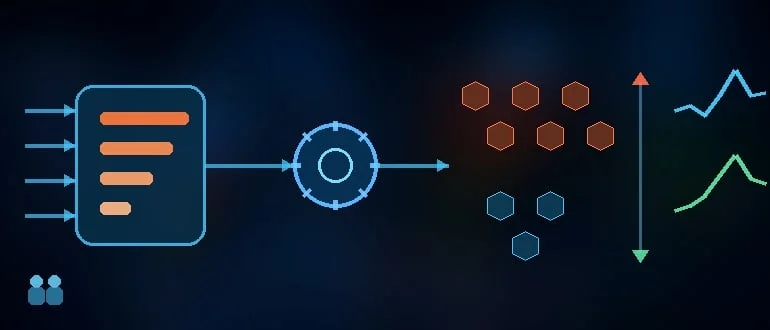
This is where KEDA shines. By honing in on external event sources rather than merely what’s happening within the pods, KEDA effectively monitors the actual demand indicated by pending work—be it in message queues or other triggers—and scales resources accordingly. For a model-serving scenario, this approach closely aligns with real-world operations. A well-placed KEDA configuration can autonomously adjust serving pods based on the number of queued requests, thereby aligning capacity planning with true demand rather than inferred usage metrics.
The framework operates through a ScaledObject, which establishes clear parameters for scaling actions based on the status of specified event sources while allowing for finely tuned thresholds that ensure responsiveness without overreacting to minor fluctuations.
This shift to event-driven scaling is not just a theoretical choice; it radically changes the economic landscape of running bursts of AI workloads. The ability to scale down to zero during periods of inactivity avoids the unnecessary costs associated with idle resources. For businesses, this translates into significant savings, particularly during quiet times when demand for processing power is minimal.
As you consider how to optimize scaling for AI workloads, keep in mind the potential pitfalls of relying solely on traditional metrics. If you find yourself grappling with inefficient scaling strategies, especially for event-driven architectures, it may be time to evaluate solutions like KEDA, which are built to address these unique challenges head-on.
Final Thoughts on AI Workload Scaling with KEDA
As we've navigated through the challenges of scaling AI workloads, particularly in the context of Kubernetes, one truth stands out: efficiency and responsiveness in managing resources are vital. The traditional Horizontal Pod Autoscaler (HPA) often fails when it comes to AI inference tasks due to misleading resource utilization metrics. Operators may witness low CPU and memory usage, while latency soars—this disconnect can lead to service degradation right before your eyes.
Enter KEDA, which shines a much-needed light on event-driven autoscaling. This tool integrates robustly with a variety of external triggers like Google Pub/Sub or AWS SQS, bringing a nuanced approach to workload management. If you're working in this space, utilizing KEDA can effectively address the limitations of HPA, allowing for a more dynamic scaling response.
However, the decision to automatically scale workloads to zero isn’t black and white. On one hand, it can significantly lower operational costs, but on the other, applications with lengthy cold-start times might suffer upon firing back up. This is a genuine consideration that developers must weigh—there's no one-size-fits-all solution.
Looking ahead, the evolution of Kubernetes and its autoscaling capabilities will likely center on improving responsiveness to real-time data. As we continue to push the boundaries of AI applications, leveraging advancements like KEDA could become standard practice in ensuring that our infrastructures are not just reactive, but smartly predictive. The next phase in this technological journey is surely about harnessing these insights to create systems that adapt autonomously—not just efficiently, but intelligently. The path is laid; those who can navigate these waters early will undoubtedly set themselves apart.
Discussion
Sign in to join the discussion.