With the European smartphone market contracting, Apple has capitalized on declining Android sales, leveling the playing field with Samsung.
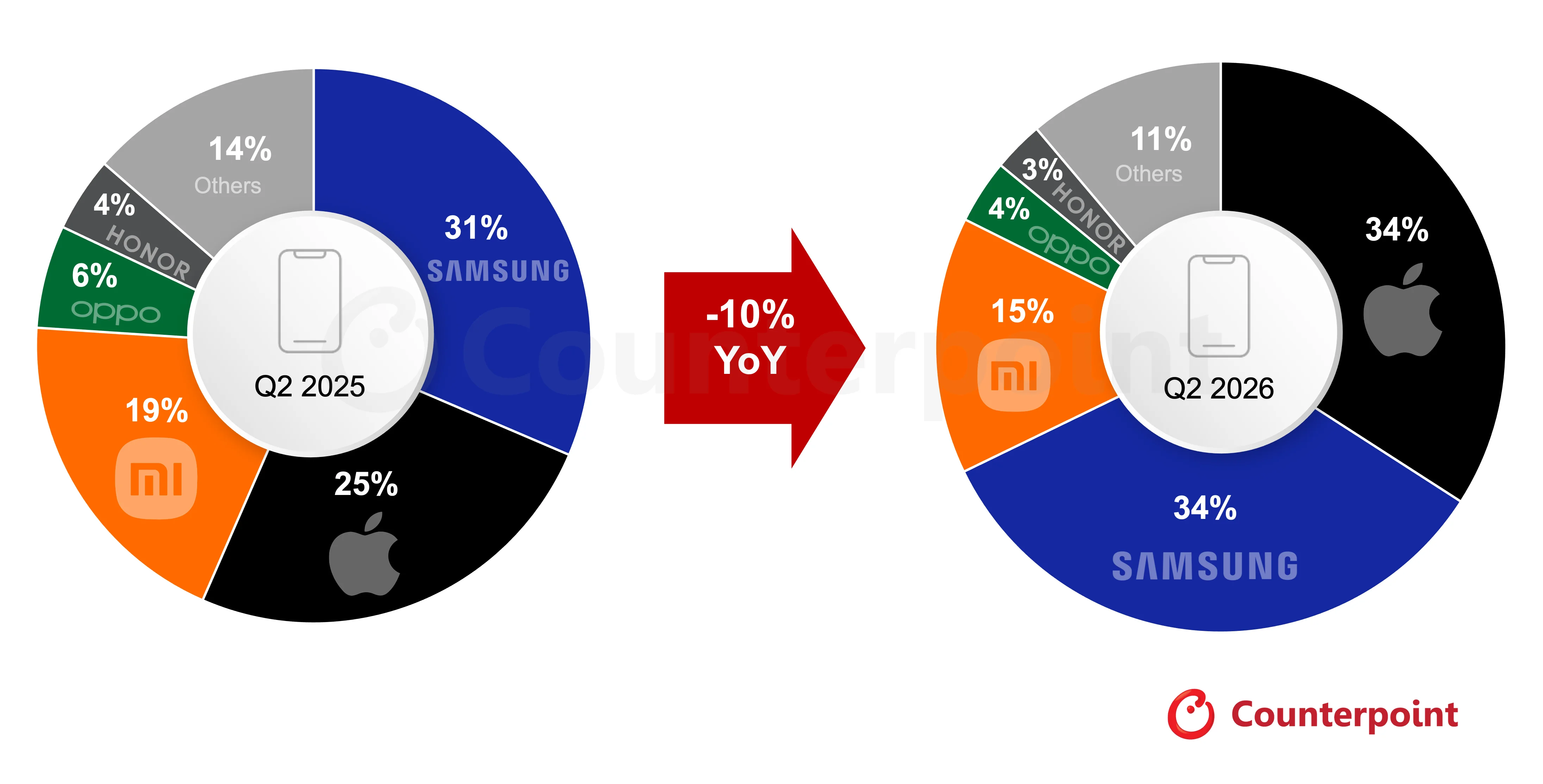
Apple's performance in the European smartphone market highlights an evolving dynamic, particularly as Android brands grapple with a significant downturn. Recent findings indicate that while Apple previously held 25% of the market in Q2 of last year, rapid changes have unfolded in just a year.
Apple's Surge in Market Share
According to Counterpoint Research, Apple surged to a 34% market share in Q2 2026, equal to Samsung's latest figures. This shift marks a notable rise from the previous year's 25%, and the overall market experienced a troubling 10% decline year-over-year. This significant gain for Apple, occurring alongside a contraction for the entire sector, illustrates the brand’s ongoing appeal amidst economic uncertainty.
The Android Market's Challenges
Android's struggles should not be underestimated. Many Android manufacturers, particularly those from China, are grappling with plummeting sales and tighter margins. Xiaomi, Oppo, and Honor have all felt the pinch, seeing their market share noticeably shrink. As Apple rises, many Android brands are left to analyze their strategic direction, product offerings, and pricing structures in an increasingly competitive environment.
This isn't the first time we've witnessed a realignment of market share among smartphone manufacturers. In previous years, Android has dominated with a variety of options and price points, catering to a much broader audience. However, Apple’s focused ecosystem and brand loyalty are proving incredibly resilient, allowing it to capitalize on the vulnerabilities of its competitors.
Economic Factors Influencing Consumer Behavior
The report attributes these shifts to broader economic challenges and the complex situation stemming from the Iran conflict, which intensified inflation and weakened consumer demand. Financial pressures like rising inflation often push consumers toward value-oriented purchases, and in this context, Apple's premium positioning is intriguing. Budget-conscious shoppers have squeezed margins, leaving several Chinese brands facing significant share reductions.
Inflation affects consumer electronics severely, especially as people prioritize spending on essential goods over luxury items. You see it across various sectors, but tech tends to experience the most visible shifts in consumer preferences. The perception of value becomes paramount. For many shoppers, the price tag of a smartphone is not just about cost but about the features and longevity the device offers. Apple's shiny reputation for quality gives it an edge that competitors need to counter.
Implications for the Smartphone Industry
This market shift has broader implications. If you're working in this space, you should consider how Apple’s rise could influence pricing strategies across the board. Don’t overlook the potential knock-on effects that declining sales for companies like Xiaomi and Oppo might have on suppliers, advertisers, and retail partners. A reduction in their market presence could lead to more significant challenges for the entire Android ecosystem, including fewer software updates, less competitive pricing, and reduced features.
And yet, Apple’s strategy may not be a safe haven in the long term. Price sensitivity is a critical issue as inflation persists. Those that rely heavily on accessing premium markets might see challenges if economic situations worsen or if new entrants in the tech space emerge that offer compelling alternatives at lower prices. This is more significant than it looks: companies like Apple may need to rethink their product lines and consider introducing products that can play in the lower price brackets without compromising their brand integrity.
Looking Ahead: The Future Outlook
As we dissect these market dynamics, it's clear that the smartphone sector is at a pivotal moment. Predictions hint at a mixed future. On one hand, Apple seems positioned for continued growth as it adeptly navigates economic challenges and brand loyalty. On the other, its competitors must innovate or risk irrelevance. With some Android manufacturers already pivoting toward mid-range offerings to attract budget-conscious consumers, the forthcoming adjustments could reshape the competitive landscape significantly.
What this means for you, as a consumer, is that choice could become more polarized. The risk of fewer mid-tier options materializing as manufacturers consolidate or exit could lead to limited availability of desirable features at accessible prices. In turn, this shift might prompt a re-evaluation of what a “premium” smartphone means. Emerging technologies and customer expectations will likely dictate the next cycle of innovation—how brands engage with their front-line consumers will be the decisive factor.
Discussion
Sign in to join the discussion.