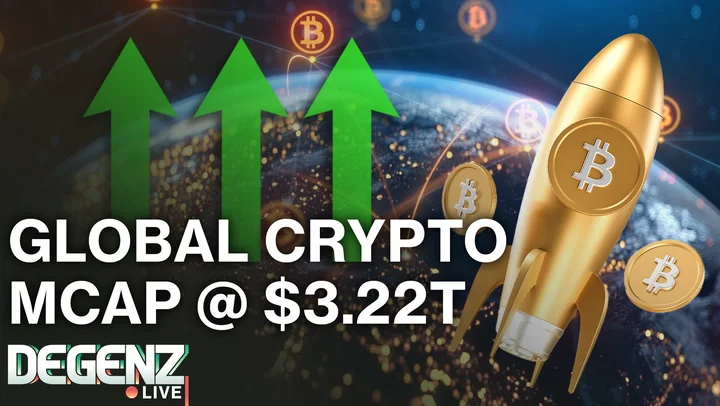
The global crypto market cap has hit $3.22 trillion, fueled by significant gains from major cryptocurrencies and Japan's push for deeper crypto integration.
Current Market Trends in Cryptocurrency
The global cryptocurrency market, once viewed as niche, has now surged to an impressive $3.22 trillion in capitalization, highlighting a marked 2% increase recently. Major players in this space are largely responsible for this upward momentum. Bitcoin, often seen as the benchmark in crypto, has increased by about 1% to reach $93,780. Ethereum, Bitcoin's closest competitor, has gained around 2% to trade at $3,240. However, what stands out is the performance of Solana, which saw a 3% growth, reaching $139. Yet, the day's clear winner is XRP, demonstrating a significant 12% rise to $2.37.
It's not just about the big players. Emerging cryptocurrencies like RENDER and SUI are also making waves, both up 18%, while LIT managed a 15% increase. This shows a potential shift in investor interest toward a wider spectrum of assets beyond Bitcoin and Ethereum.
This is more significant than it looks. A healthier market often reflects broader acceptance and innovative projects gaining traction.
Institutional Developments
In an environment where institutional involvement can significantly impact market dynamics, recent moves by major financial players are worth examining. Bank of America has introduced crypto investment recommendations for its wealth management clients, advising a 4% allocation of portfolios to cryptocurrencies. This kind of endorsement from a conventional banking institution signifies growing acceptance and recognition of cryptocurrencies as viable investment options.
Meanwhile, Morgan Stanley's foray into cryptocurrency is even more defined with its recent filing for a Solana Trust with the SEC. This indicates that traditional finance is not just observing but is actively seeking ways to incorporate cryptocurrencies into their offerings. However, the announcements aren’t all rosy; Goldman Sachs recently upgraded Coinbase to a 'Buy' rating while downgrading eToro. This dual action likely indicates that while some platforms are poised for upward growth, others may face challenges in a competitive market.
Regulatory Developments
The regulatory landscape surrounding cryptocurrencies is rapidly changing, especially in regions like Japan. The finance minister has publicly backed broader adoption of cryptocurrencies, advocating for lower taxes and reforms aimed at exchanges. Such a stance is crucial not just for Japan but for countries observing its leadership. More lenient regulations could encourage innovation and investment, offering a more hospitable environment for crypto startups and blockchain initiatives.
What this means for you is that if you're part of this space, you're likely looking at an increasingly supportive environment for crypto-related businesses.
The Blockchain Trilemma and Technological Advancements
Vitalik Buterin’s comments regarding Ethereum's attempts to tackle the "Blockchain Trilemma" are also noteworthy. The challenge of balancing decentralization, security, and scalability has haunted blockchain technologies since their inception. Buterin claims that Ethereum's Layer-2 roadmap could provide a path toward overcoming these limitations. By offloading transactions to secondary protocols, Ethereum could enhance its transaction speed and lower costs while maintaining security and decentralization principles. And yet, many in the industry remain skeptical about whether these goals can be met efficiently.
The success of Ethereum's approach could serve as a blueprint for other projects grappling with similar issues. Many competitors are watching closely, hoping to attract users who prioritize quick and cost-effective transactions without sacrificing the core values of decentralization.
Security Risks and Consumer Awareness
Despite the market's overall growth, security remains a paramount concern. Recent reports indicate that Kraken is investigating allegations of customer data being sold on the dark web following a security breach. Such incidents not only compromise individual privacy but can undermine trust across the industry.
Ledger users are also advised to exercise caution due to a data breach that affected its e-commerce partner, Global-E. This exposure of customer contact information serves as a stark reminder of the vulnerabilities present in digital financial ecosystems. As these platforms iterate and improve their security protocols, awareness and vigilance on the consumer side are crucial. If you're involved in cryptocurrency, staying informed about security practices isn’t just advisable; it's essential. (and this is the part most people overlook)
Implications and Future Outlook
The trends we're witnessing now could signify a turning point for the cryptocurrency market. Institutional acceptance combined with progressive regulatory frameworks might pave the way for a more stable and secure market environment. This could attract more conservative investors who have previously held back due to uncertainty.
However, the potential for explosive growth comes with equally significant risks. As security breaches and regulatory scrutiny continue to loom, the environment could become hostile for platforms unprepared to adapt proactively. The industry will need to address public concerns about safety and compliance seriously, especially as it ventures to integrate further with traditional financial systems.
Investors and industry participants should prepare for an ever-shifting landscape, where technological advancements may outpace regulatory developments, thereby creating both opportunities and challenges. With the increasing participation of traditional financial institutions, a hybrid system blending old and new financial paradigms could emerge. This scenario holds the promise to redefine not just investments, but the very nature of financial transactions themselves.
Discussion
Sign in to join the discussion.