Base images play a crucial role in Kubernetes security; organizations must prioritize image hygiene to protect their software supply chains.
Understanding the Importance of Base Images in Software Supply Chain Security
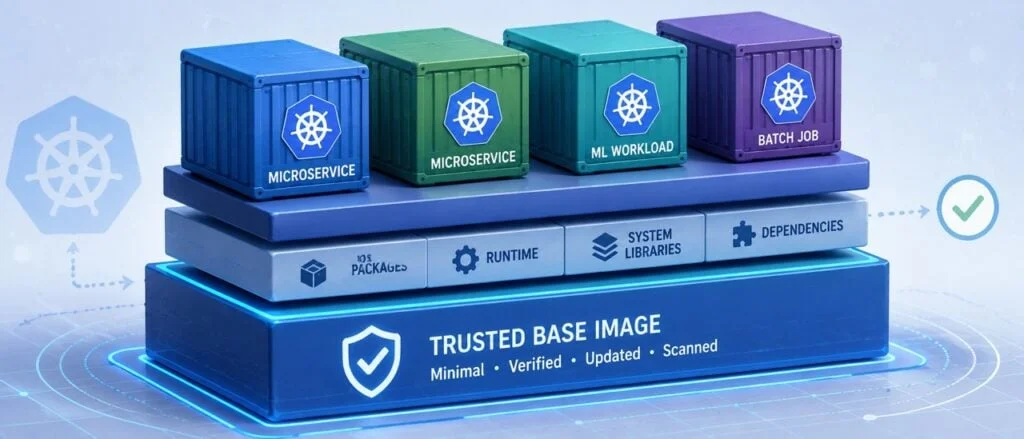
The complexity of Kubernetes environments magnifies the significance of software supply chain security. Among the pivotal elements within this ecosystem is the base image, which serves as the bedrock for containerized applications. Regardless of whether your microservices utilize Python, Go, or Java, the security posture of all dependent applications is profoundly affected by the integrity of the base image.
Organizations are now faced with the challenge of maintaining robust security measures around their base images. A reevaluation of image hygiene practices is essential for fostering a resilient container ecosystem. This exploration highlights the impact of base images on software supply chain security and provides actionable strategies for improvement.
Why Base Images Are Critical for Security
Every container starts with a base image, whether it’s crafted by developers or sourced from public repositories. This foundational layer establishes a trust framework for the applications built on top. However, should the base image be compromised—whether due to obsolescence, excessive bloat, or vulnerability—the resultant container inherits these weaknesses. This risk becomes even more pronounced in Kubernetes, where workloads can scale rapidly, potentially leading to widespread exposure.
Commonly, Docker base images are obtained from public repositories like Docker Hub or GitHub Container Registry. While accessible, this method poses risks, as public images may harbor unpatched vulnerabilities or outdated components. Consequently, deploying susceptible images across a cluster can exacerbate security issues as they propagate.
The Risks Embedded in Base Images
While organizations frequently scrutinize their application code for vulnerabilities, many security loopholes can be traced back to the underlying base images. Several factors contribute to these risks:
- Whole operating system layers are often bundled with base images.
- Developers may neglect to routinely audit or update these images.
- The quality and maintenance frequency of public images can vary significantly.
- Vulnerabilities can accumulate over time, even if the application code remains static.
Given that a Docker base image can encapsulate hundreds of packages, many of which may not be actively utilized by the application, each extraneous component introduces additional entry points for potential attackers. This insight has sparked a growing trend toward minimalist images, such as distroless or scratch images.
Kubernetes Amplifies Base Vulnerabilities
Kubernetes excels at scalability, automation, and expedited deployment. However, these advantages can introduce new vulnerabilities if systems are misconfigured or inadequately protected. Specific risks include:
- Horizontal scaling allows vulnerabilities to proliferate across multiple pods.
- Automated rollouts might inadvertently deploy insecure images across the entire cluster.
- CI/CD pipelines could consistently build upon outdated images.
- Shared registries may facilitate the spread of compromised images among various teams.
The systemic nature of a singular vulnerable Docker base image poses an alarming threat. Supply chain attacks are increasingly targeting these upstream components rather than the application code itself, underscoring the importance of adhering to best practices for Docker image development.
Strategies for Strengthening Supply Chain Security
To enhance security, organizations must treat base images as critical assets requiring diligent management. Here are effective strategies to consider:
Opt for Trusted Sources
When acquiring images, it’s prudent to utilize vendor-maintained sources. Relying on official repositories minimizes the risk of incorporating hostile or inadequately maintained components. Mirroring vetted images in private registries for further analysis is also a wise step.
Adopt Minimalist Images
Employing minimal images can significantly decrease the attack surface by eliminating unnecessary packages that can inflate software complexity. Options such as distroless, Alpine, and scratch can provide efficient alternatives, particularly for Python images laden with dependencies.
Continuous Image Scanning
Security is not a one-time effort; it demands ongoing vigilance. Conducting baseline analyses and scans at various stages—build time, within CI/CD processes, at registry levels, and runtime—ensures that vulnerabilities are detected early before they escalate into larger concerns.
Image Signing and Verification
Employing tools like Cosign and Notary to cryptographically sign images can bolster security. Leveraging Kubernetes admission controllers for signature verification prior to deployment helps ensure that only authorized Docker base image versions are utilized.
Automate Updates
Automated pipelines serve as an excellent avenue to swiftly rebuild containers when new base versions are released. This approach guarantees that security patches propagate efficiently across applications, keeping both OS-level and language-specific dependencies current.
Utilize Software Bills of Materials (SBOMs)
The implementation of SBOMs has become increasingly vital for transparency in identifying components within containers. The insights provided by an SBOM can expedite vulnerability detection, improve compliance tracking, and enhance incident responses.
Embrace Zero Trust Principles
Incorporating zero-trust principles into the management of container images involves a meticulous lock-down methodology. This comprises limiting publishing permissions to specific teams, constraining registries from which Kubernetes can pull images, and enforcing immutability for approved base versions, thereby guarding against the spread of potentially compromised images.
Best Practices for Securing Python Workloads
The adoption of Python in Kubernetes workloads, especially for data science and machine learning, has rapidly risen. However, given the inherent dependency complexity and bulkiness of Python images, regular monitoring and security practices are vital:
- Utilize minimal or slim image variants.
- Pin specific versions of libraries and dependencies.
- Remove any build tools subsequent to compiling the application.
- Avoid installing unnecessary system packages.
- Schedule periodic rebuilds of images to incorporate vital upstream patches.
The Path Ahead for Base Image Security in Kubernetes
As attacks on the software supply chain become increasingly sophisticated, organizations must adapt their security strategies. The base image will remain integral to this evolution, with a shift towards:
- Broader usage of signed images.
- Greater reliance on distroless and minimal images.
- Enhanced automation in rebuild pipelines.
- Stronger integration with security tools across registries.
- Increased transparency through comprehensive SBOM implementations.
Prioritizing Security from the Ground Up
Kubernetes has revolutionized software deployment, but it also amplifies the risks associated with insecure foundations. Recognizing the base image as a fundamental component of security is essential. By prioritizing trusted source intake, minimizing image footprints, enforcing image signing, and automating updates, organizations can significantly diminish risks. Your application security stands on the choices made regarding base images—get it right, and you’re laying a solid foundation for the future.
Discussion
Sign in to join the discussion.