Streamlining cloud-native costs is essential for organizations; discover practical strategies to enhance efficiency and minimize waste.
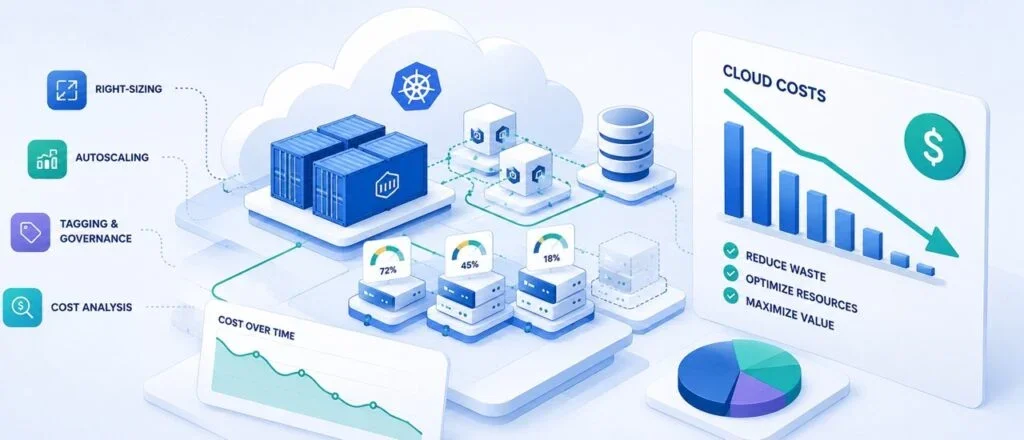
Cloud-native technologies, such as containers, microservices, and serverless computing, have transformed the way organizations deploy and manage applications. However, with their widespread adoption comes a pressing need for effective cost management strategies to keep expenses in check.
Identifying the Cost Control Challenge
The agility and scalability offered by cloud-native architectures can easily lead to inflated spending if not managed carefully. Factors like underutilized Kubernetes nodes, abandoned databases, and over-provisioned resources often contribute to unexpected cost surges. In many cases, these expenses aren't because cloud services are inherently expensive, but rather stem from poor visibility and governance in managing cloud resources.
Defining Cloud Cost Optimization
Cloud cost optimization is about reducing expenditures associated with cloud services while maintaining a satisfactory quality of service. This involves careful monitoring of resource consumption and establishing governance models that help prevent over-provisioning while ensuring that the necessary computing resources are available as needed. It's about aligning cloud spending with actual requirements, thereby enabling organizations to achieve efficiency without compromising on performance.
Key Strategies for Optimizing Cloud Costs
To tackle cloud costs effectively, organizations can consider various best practices:
1. Right-Sizing Resources
One significant area where organizations tend to overspend is in overprovisioning resources. Right-sizing involves adjusting capacity—be it CPU, memory, or storage—to align with actual usage. Regularly assessing resource consumption can help identify and adjust nodes or pods that consistently operate below capacity, ultimately leading to cost savings.
2. Implementing Cost Guardrails in CI/CD Pipelines
Incorporating cost control measures into Continuous Integration and Continuous Deployment (CI/CD) pipelines ensures that unnecessary resources are not maintained beyond their usefulness. Strategies include:
- Establishing infrastructure cost estimates during the pull request phase
- Applying policy-as-code rules to prevent oversized or unnecessary deployments
- Using mandatory tags and ownership designations on provisioned resources
- Setting budget thresholds to flag any unauthorized resource creation
- Automatically removing expired temporary resources
- Linking release annotations to cost impacts for greater transparency
3. Conducting Regular Cost Analyses
Continuous monitoring of cloud expenses can help organizations pinpoint high-cost resources and detect anomalies early. By analyzing cloud spending patterns, businesses can:
- Identify potential overages and draft proactive management plans
- Spot underutilized resources and optimize accordingly
- Forecast future spending based on established trends
4. Embracing Serverless Architectures
Transitioning to serverless architectures can dramatically reduce costs as this model allows organizations to pay only for the resources utilized when executing specific code. By leveraging serverless computing, businesses can optimize operational expenses and decrease time to market.
5. Autoscaling for Dynamic Demand Management
Autoscaling represents a means to manage resource availability according to real-time demand rather than preemptively over-provisioning. This includes implementing metrics-based scaling policies that consider various indicators, such as request latency and queue depths, particularly in production environments.
6. Designing Services for Efficiency
Organizations looking to enhance their cloud efficiency should adopt practices such as:
- Utilizing asynchronous messaging patterns and connection pooling
- Consolidating services that offer little independent value
- Opting for modular monolith architectures over microservices where feasible for simpler maintenance
- Applying serverless solutions selectively, primarily for sporadic event-driven workloads
Addressing Challenges in Cost Optimization
Despite best efforts, organizations face several challenges in managing cloud costs:
- Monitoring Expenses: The growing reliance on cloud services complicates the tracking of expenditures.
- Resource Overspending: Without stringent controls, teams may provision excess resources, leading to waste.
- Unforeseen Costs: Lack of oversight can result in unexplained financial spikes when unrestricted resource creation is allowed.
- Cost Management Oversight: Without a consolidated view, understanding spending trends becomes increasingly difficult.
- Accurate Forecasting: Providing reliable estimates for resource needs is a challenge that necessitates precise planning.
Continuous Cost Management
Optimizing cloud costs is not a one-time task but an ongoing effort. By integrating a disciplined approach to resource allocation, organizations can harness the full potential of cloud-native technologies while managing expenses effectively. Achieving greater visibility over cloud resources will enable firms to measure, optimize, and automate cost management processes efficiently.
Discussion
Sign in to join the discussion.