Cloud-native platforms can spiral into unnecessary complexity; a reevaluation of operational costs and component value is essential for efficiency.
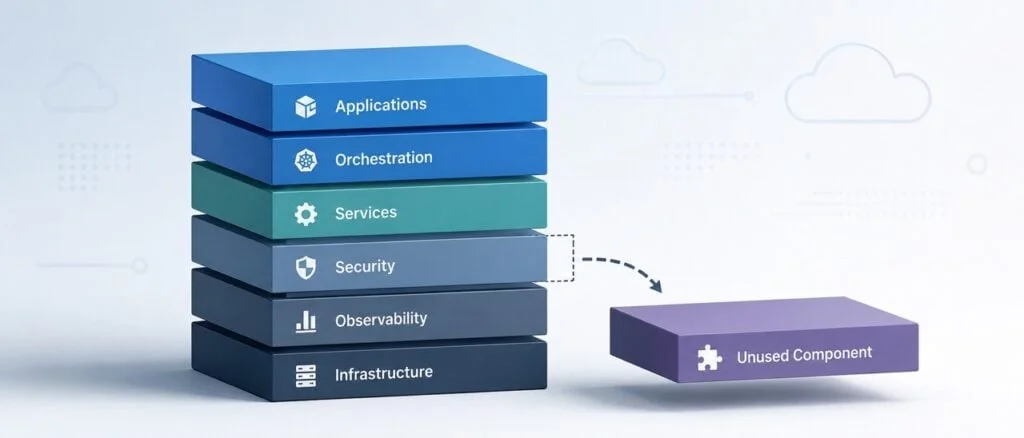
Cloud-native platforms evolve through incremental changes, gradually integrating tools and technologies. While adding components like orchestration, CI/CD, observability, and security can address specific challenges, these additions often lead to a platform that becomes unwieldy and complex. Over time, teams may fail to consider the entire system's interactions, complicating the management of their environment.
Understanding the Operational Impact of Each Layer
When teams assess a new cloud-native component, the focus typically stays on direct costs, such as infrastructure or licensing. That perspective is limited. Each new layer introduces additional operational obligations: configuration, upgrades, monitoring, security measures, and necessitates engineering expertise to navigate its interactions with existing systems. A component that seems economical on the surface may still incur substantial operational overhead.
This doesn’t suggest an outright avoidance of new capabilities; rather, it emphasizes the necessity for a holistic view of the cost implications associated with each addition to an existing stack.
Resource Usage as a Diagnostic Tool
Monitoring resource utilization can provide insights into rising complexities within a platform. I’ve observed scenarios where certain resources are underutilized while other processes exhaust available capacity. The instinctive response may be to enhance the infrastructure or expand resources, but such measures without addressing underlying issues can inflate costs without resolving the problems at hand.
Before scaling resources, teams should investigate the consumption patterns, waiting times, and architecture-related dependencies consuming resources, focusing on optimizing existing capacity rather than simply increasing it.
Considerations Around Automation
Automation serves as a cornerstone of cloud-native operations, enhancing efficiency and consistency in deployments. However, it also introduces complexities—specifically, added dependencies between different automated processes like provisioning, monitoring, and security. As automations interlink, troubleshooting becomes more challenging.
A pertinent question arises here: Is automation genuinely alleviating the total engineering workload, or merely redistributing it elsewhere? This answer may fluctuate as the platform matures.
Indicators for Reassessing Platform Components
Certain indicators signal when it's time to reevaluate a platform component's necessity. Low usage is one such indicator; if only a limited number of workloads leverage a tool, its operational expense deserves scrutiny against the value provided. Overlapping functionalities are another red flag, often resulting from various teams adopting separate tools for similar tasks over time.
Maintaining outdated components may burden engineers with increased upkeep without sufficient return on investment, while unclear ownership can heighten operational risks during incidents. Recognizing these patterns doesn't automatically necessitate the removal of components, but it should prompt a careful evaluation.
Five Key Questions for a Component Review
To conduct a thorough review of platform components, consider evaluating them through these five questions:
- Value: What specific issue does this component solve?
- Usage: How many workloads depend on it?
- Cost: What resources does it require, both in terms of infrastructure and engineering?
- Dependency: What systems rely on it?
- Ownership: Who is responsible for its maintenance and troubleshooting?
Analyzing these areas helps uncover issues that might not be apparent when components are judged individually. For example, a component might deliver significant benefits to a handful of workloads while complicating operations for many others, or it could be low in cost yet high in maintenance demands.
Simplification: A Key Engineering Principle
Discussion in engineering circles often gravitates towards what new technology should be introduced next. However, a mature approach to platform engineering must also emphasize what can be removed or simplified. Eliminating superfluous components, consolidating overlapping functions, or reducing dependencies can yield substantial value—potentially equal to, if not greater than, that of new additions.
This is particularly relevant in cloud-native environments, where the ease of adding components can lead to unchecked complexity.
Final Thoughts on Complexity Management
Cloud-native architecture isn't about increasing the array of technologies and automation layers ad infinitum. Instead, it centers on selecting appropriate components to address workload requirements and regularly assessing their ongoing value against the complexities they introduce. A well-designed platform should evolve in pace with organizational needs, and crucially, it should incorporate a disciplined review process for existing assets.
The guiding principle remains clear:
Every component must justify its existence—not due to popularity, peer usage, or isolated problem-solving, but because its benefits outweigh the operational costs it entails.
Discussion
Sign in to join the discussion.