Intel AI Chip Demand Grows as Production Limits Weigh on Outlook
Oct 30, 2026 · 456 views
Intel’s data center and AI revenue surged, but chip production constraints, weaker PC demand and heavy manufacturing spending cloud its near-term outlook.
A strong quarter couldn’t rescue Intel’s outlook
Intel’s results showed a company benefiting from the AI boom and still struggling to turn that demand into a stronger near term outlook. Investors focused on the gap: the chipmaker can’t make enough server processors to meet demand, while its core PC market is weakening and its manufacturing expansion is consuming cash.
Shares fell nearly 30% to $65.76 on Friday, erasing more than $146 billion in market value. It was Intel’s steepest single day decline in more than 50 years. The trigger was its fourth quarter forecast, which missed Wall Street’s expectations despite a strong third quarter.
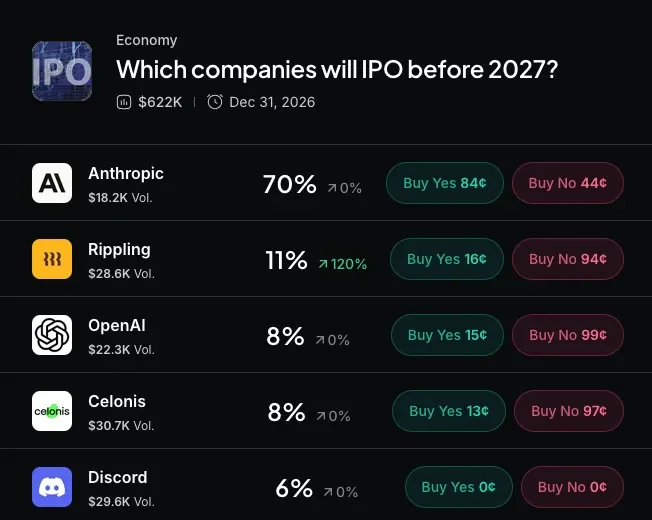
Myriad: Which company will IPO next? Click to make your prediction.
The third quarter itself was a bright spot. Revenue rose 21% from a year earlier to $16.5 billion, and adjusted earnings came in at $0.52 per share, above both Intel’s $0.38 guidance and Wall Street’s $0.40 estimate. CFO Dave Zinsner said it was the company’s eighth consecutive quarter of beating its financial expectations.
Intel’s Data Center and AI division drove much of that strength. It brought in $7.3 billion, up 78% year over year, and posted $3 billion in operating profit, equal to 42% of the division’s revenue.
Here’s the thing: those results don’t answer the question investors were asking about the next quarter. Intel expects fourth quarter revenue of $15 billion to $16 billion, putting the midpoint at $15.5 billion, about $1.6 billion below analysts’ $17.07 billion estimate. Adjusted earnings per share are forecast at $0.25, versus expectations of $0.43.
The forecast also points to thinner margins. Intel expects a non-GAAP gross margin of 38% in the fourth quarter, down from 44.1% in the third. The company cited softer PC demand, limits on server processor production, and an accident at a factory in Israel.
That leaves Intel with a difficult split: demand for AI server processors is booming, but manufacturing and packaging constraints are preventing the company from supplying enough chips. Meanwhile, Intel expects the PC market to contract through 2027. The numbers make the AI opportunity clear; they also show how little that opportunity helps if production can’t keep pace.
Zinsner has warned that 2027 will be an investment year and that Intel probably won’t generate positive free cash flow next year. Free cash flow is what remains after a company pays operating expenses and invests in equipment and infrastructure. Intel is accepting a near term cash squeeze as it expands manufacturing.
“Probably not a dynamic where we are going to have positive free cash flow next year,” Zinsner said on the earnings call. He said Intel expects at least a 20% return on invested capital for its manufacturing node investments, while acknowledging that several major projects will demand substantial spending at once.
That spending supports Intel’s attempt to rebuild its manufacturing business and compete with Taiwan Semiconductor Manufacturing Company, or TSMC, the world’s leading contract chipmaker. Intel wants its factories to serve both its own products and outside customers—a model known as a foundry. The ambition is clear. Whether Intel can fund that expansion while meeting current demand is the harder question.
Partners help Intel’s case, but execution still decides it
Intel has reasons to believe its recovery can hold. Nvidia put $5 billion into the company in September 2025 and agreed to work with Intel on custom PC and data center processors, giving Intel both fresh capital and a link to Nvidia’s AI ecosystem. The other test is technological: Intel’s 18A manufacturing process, which will underpin chips including Panther Lake, is central to its bid to catch up.
Apple could add another source of momentum. A preliminary agreement for Intel to manufacture some Apple chips helped lift Intel shares above $130 in May. If completed, the potential deal would bring in a major customer as Apple seeks a more diversified manufacturing supply chain.
Still, partnerships and prospective orders don’t guarantee a turnaround. Intel has strong data center demand, but it needs to raise production, contend with a shrinking PC market and fund an expensive expansion. Friday’s selloff is a reminder that investors are waiting for those pieces to translate into reliable cash generation. The Nvidia investment is a meaningful vote of confidence; the harder proof will come from Intel’s ability to deliver at scale. Nvidia’s investment helps make that case, but it can’t make it on Intel’s behalf.

Discussion
Sign in to join the discussion.