A possible SpaceX–Tesla merger would combine 30,221 BTC on one balance sheet, making the companies’ Bitcoin holdings more visible to investors.
A possible merger would concentrate a major Bitcoin reserve
The proposed SpaceX–Tesla tie-up would put 30,221 Bitcoin on one corporate balance sheet. That’s about $2.5 billion at a price near $83,000, and would make the combined company one of the largest corporate Bitcoin holders outside the mining industry. The merger is only a possibility, though: Elon Musk said independent board committees at both companies are weighing it, and warned that calling a deal “a certainty” would be “overstating it.” For now, the combined total describes a potential ownership structure, not a completed transaction or a new operating strategy.
The distinction matters because a balance-sheet total can look definitive even when the business decision behind it isn’t. A merger would bring two reported Bitcoin positions under one corporate roof, but it wouldn’t, by itself, say whether the companies planned to hold, sell, or buy more. Those choices would require separate evidence. At present, the public disclosures establish the size of the reported holdings; they don’t establish what either company intends to do next.
Bitcoin is already part of Tesla’s public financial story. SpaceX’s holdings were harder to see. Its IPO filing in June disclosed 18,712 BTC, a reserve built up over years inside a private company. That filing revealed more than double the amount blockchain trackers had previously attributed to SpaceX wallets. The gap is a reminder that public blockchain data doesn’t necessarily show the full picture of a company’s holdings: wallet attribution can be incomplete, and a private company’s disclosures may be limited.
That difference in visibility gives the proposed tie-up a second dimension. It would combine two businesses, but it would also put SpaceX’s previously less visible Bitcoin position alongside Tesla’s publicly reported reserve. Investors and other readers could then encounter the holdings as one larger figure, subject to the reporting practices of the combined company if a deal were completed.
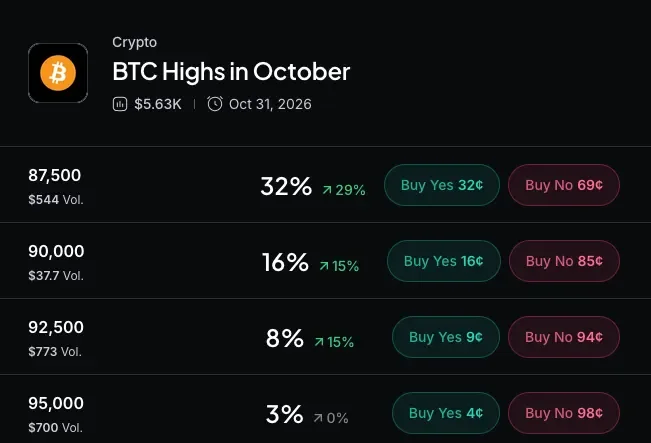
Myriad: How high will Bitcoin go? Click to make your prediction.
A large treasury, with little sign of movement
Tesla reported 11,509 BTC in its latest quarterly filing; SpaceX listed 18,712 BTC in its IPO registration statement. Together, the companies’ reported Bitcoin cost about $1 billion, or roughly $35,000 per coin on average. Decrypt reported that a merger would put this position among the largest held by public companies, behind only a handful of firms, including Michael Saylor’s Strategy.
The cost basis and the current market value answer different questions. The roughly $1 billion figure describes what the companies paid, on average, for the reported coins; the estimated $2.5 billion figure reflects their value at a much higher Bitcoin price. That spread can change as the market price moves. It’s a substantial paper gain at the cited price, but it doesn’t reveal whether the companies would realize that value by selling.
The SpaceX disclosure is the more revealing part. Its Bitcoin reserve was effectively out of public view until the IPO filing, so investors had years of incomplete information about how much crypto the company held. That gap matters: public wallet estimates had substantially understated the position. The filing provides a stronger reference point than wallet estimates alone, while still describing the holdings at the time and in the context of the registration statement.
A merger would change who holds the coins on paper, but there’s no indication it would change either company’s Bitcoin strategy. Neither has signaled buying or selling. Tesla has reported no change to its holdings, while SpaceX’s last known coin movements were in prior years. The disclosure makes the combined balance easier to see; it doesn’t show what Musk or either company plans to do with it.
That’s a useful limit on what can be inferred from the headline number. Large holdings don’t automatically mean active trading, and a disclosed reserve doesn’t tell readers how management weighs Bitcoin against other uses of corporate cash. The available information supports a comparison of reported holdings and their estimated value. It doesn’t support a claim that the merger would make either company more bullish on Bitcoin.
What a combined balance sheet could change
A Musk mega-merger could do more than combine businesses. It could put one of the most closely watched corporate Bitcoin holdings inside a single public company, where quarterly disclosures and fair-value accounting would make its swings harder to ignore. When an asset’s market value moves, reporting can bring that movement into view even if the company hasn’t sold the asset. That could make Bitcoin’s price changes a more prominent part of the company’s financial story.
Tesla has already shown what that can mean: as Bitcoin fell, the company booked an accounting loss. A combined treasury could face the same scrutiny. The numbers remain hypothetical, though, because the proposed transaction is still exploratory. And the accounting treatment of a future combined company would depend on the facts and reporting in place then; the current figures don’t settle that question.
This is more significant than it looks. The main change may be who has to explain the holdings, and how often the market sees them discussed alongside the company’s broader results. For readers following either business, a combined figure could make the scale easier to grasp while also inviting a simpler, potentially misleading reading: that the size of the reserve signals a firm plan to expand it.
If you’re working in this space, the practical point is to keep three things separate: how many coins were reported, what they cost, and what they’re worth at a given market price. Those figures can move on different timelines, and none alone tells you what management will do. (And this is the part most people overlook.) The disclosure gap around SpaceX also shows why wallet tracking can be an imperfect substitute for company filings.
The outlook depends on the deal—and the disclosures
That’s the broader point. A deal that may be discussed primarily in terms of Musk’s companies could also create a Bitcoin giant—and make its crypto exposure a more visible part of public-company reporting. The scale is striking, but the case for interpreting it as a strategic shift isn’t there yet. Until the companies provide more information about the proposal or their holdings, the strongest conclusion is narrower: a merger could consolidate a large, already reported reserve and make its value more visible to investors.
For now, the uncertainty is not a footnote. The board committees are weighing a possibility, and Musk has explicitly cautioned against treating a deal as certain. If the proposal doesn’t proceed, the holdings remain on separate balance sheets and the combined total remains a useful comparison rather than a corporate fact. If it does proceed, subsequent disclosures will matter more than the headline total: they’ll show whether the new structure changes reporting or the companies’ approach to Bitcoin.
A large number, plainly stated. The strategy is still unknown.
Discussion
Sign in to join the discussion.